












































































Key takeaways
-
To work out how much urolithin A (UA) per day a product provides, check the amount per serving and the suggested daily use on its label.
-
Published human trials have studied 500 mg and 1,000 mg daily. These research amounts are not personal recommendations.
-
Check how many capsules make up one serving. The urolithin A amount on the Supplement Facts panel applies to the full serving, not necessarily one capsule.
-
Research has not established a best time of day. Follow the product’s timing and food instructions, and choose a consistent time that fits your routine.
-
InfiniWell’s Cellular Energy Pro contains liposomal NMN and urolithin A. Check its current label for serving information and suggested use.
How much urolithin A should you take per day? There’s no single amount that fits every adult. Start with your product’s suggested use, and ask a qualified healthcare professional about what’s appropriate for you.
Published human trials have studied 500 mg and 1,000 mg daily, but these research amounts aren’t personal recommendations. This guide explains how to read serving information, what human research has examined, and what to consider about timing and food.
Start with the serving size on the label
Start with the Supplement Facts panel and the suggested-use directions. The urolithin A amount listed applies to the full serving, which may be one capsule or several.
The label tells you what’s in the formula and how the manufacturer suggests taking it. It isn’t personal guidance. If the directions aren’t clear, ask the manufacturer or a qualified healthcare professional.
|
What to check |
Where to find it |
Why it helps |
|
Urolithin A per serving |
Supplement Facts panel |
Shows the amount in one full serving |
|
Capsules per serving |
“Serving size” on the panel |
Tells you how many capsules provide that amount |
|
Servings per container |
Near the serving size |
Helps you compare cost per serving |
|
Suggested use |
Label directions |
Explains how much to take and how often |
|
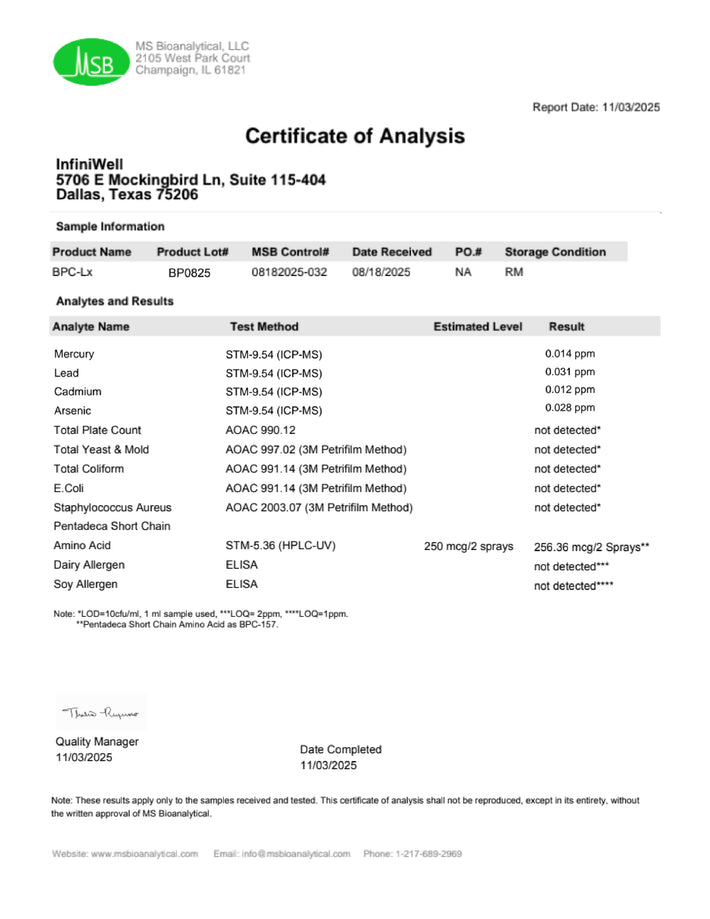
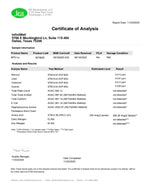
Certificate of Analysis (CoA) |
Brand’s website or available on request |
Shows results for the ingredients and quality checks tested |
For combination formulas, see our guide to reading an NMN label. Our explainer on Certificate of Analysis reports covers what to look for in testing results.
What daily amounts have human trials studied?
Published human trials have examined 500 mg and 1,000 mg of urolithin A daily. For example:
-
A four-month placebo-controlled trial studied both amounts in middle-aged adults.
-
A separate four-month randomized trial studied 1,000 mg daily in older adults.
These studies examined aspects of muscle health, including strength or endurance, alongside measures related to mitochondrial function. Researchers compared participants taking urolithin A with a placebo group. Some measures showed differences between groups, but the main outcomes didn’t differ significantly.
Further research is needed to understand what these findings mean for healthy aging.
Additionally, the amounts studied aren’t personal recommendations, and matching them doesn’t guarantee the same absorption or results. Current evidence doesn’t establish that a larger serving delivers greater health benefits. Don’t exceed your product’s suggested use to match a research amount.
Research in animal models and cultured mouse muscle cells has examined how urolithin A affects mitophagy, a process that helps maintain mitochondrial quality by removing damaged or dysfunctional mitochondria. These preclinical findings don’t establish an appropriate daily serving for people.
To learn about cellular energy production and approaches studied to support mitochondrial health, read our guide to mitochondrial health supplements.
What do human trials tell us about safety?
The two four-month trials above reported that urolithin A was generally well tolerated at the amounts studied. That doesn’t establish that it’s suitable for everyone or answer questions about years of use.
Keep these limits in mind:
-
Study length: Four-month findings can’t establish safety over several years.
-
Participants: Findings in middle-aged and older adults don’t establish suitability during pregnancy, breastfeeding, or childhood.
-
Your routine: Ask a qualified healthcare professional to review the supplement alongside any medications and other supplements you take.
If a supplement doesn’t agree with you, stop taking it and seek professional guidance. The NIH’s guide to dietary supplements explains what to discuss before starting a product.
Can food provide a set amount of urolithin A?
Pomegranates, certain berries, and walnuts provide ellagitannins rather than urolithin A itself. Your gut bacteria may convert these compounds into urolithin A, but that conversion varies from person to person. Eating the same food doesn’t mean two people will produce the same amount.
So, how much urolithin A is in pomegranate? There isn’t a fixed amount you can count toward a daily serving. The same applies to pomegranate juice. What your body produces depends on your gut microbiome.
Direct supplementation provides a labeled amount without relying on that conversion, but it doesn’t replace the nutritional value of these foods.
When should you take urolithin A?
Research hasn’t established a best time of day to take urolithin A. Start with your product’s directions, then choose a time that fits your routine.
-
Check food instructions: Follow the label’s guidance on taking it with a meal or on an empty stomach. If it doesn’t specify, ask the manufacturer or a qualified healthcare professional.
-
Review your routine: If you take medications or other supplements, ask a qualified healthcare professional whether you need to consider timing.
-
Don’t double up if you miss a serving: Ask a qualified healthcare professional what to do rather than taking extra capsules to catch up.
What should you check in a combination formula?
Some supplements combine urolithin A with other active ingredients. Taking extra capsules to get more urolithin A also means taking more of those ingredients.
InfiniWell’s Cellular Energy Pro, for example, contains urolithin A and liposomal NMN. If you’re considering it alongside a separate NMN supplement, check both labels for:
-
Overlapping ingredients: Identify ingredients that appear in both products.
-
Amounts per serving: Check how much of each ingredient the full serving provides.
-
Suggested use: Note how many servings each product directs you to take daily.
Keep both labels on hand so a qualified healthcare professional can review the combined amounts before you take the products together.
Start with the label, then check your routine
Research amounts offer context, but they aren’t personal recommendations. Follow your product’s suggested use, account for overlapping ingredients, and ask a qualified healthcare professional about serving or timing questions.
If you’re considering Cellular Energy Pro, review its label for the urolithin A and NMN amounts per serving. For questions about the formula or label directions, contact the InfiniWell team.
Urolithin A timing and amount: FAQs
-
SOURCES
Products mentioned in this article


You May Also Like
View All Articles

Peptides for Hair Growth: A Guide to Cosmetic Scalp Care
Peptides for hair growth get discussed as if they all do the same thing, but the ingredients and the evidence differ. This guide compares GHK-Cu, zinc thymulin, and PTD-DBM as cosmetic scalp care, and explains what the research can and cannot show.

CoQ10: Benefits and Its Role in Cellular Energy
Coenzyme Q10 (CoQ10) is a compound the body makes and uses during cellular energy production. This guide explains what CoQ10 does, how ubiquinone and ubiquinol differ, what the research shows, and how to compare a CoQ10 supplement.