












































































































Key takeaways
-
Supplements marketed for bloating do not all have the same purpose.
-
Fiber, probiotics, digestive enzymes, and botanicals are different ingredient categories.
-
Food sources, unhurried meals, and gradual dietary changes are useful starting points.
-
Research on one preparation does not establish the effects of another supplement form.
-
Persistent discomfort is a reason to talk with a qualified healthcare professional.
There is no single best supplement for bloating that suits everyone. Products sold in this category can contain very different ingredients, from fiber and live microbes to enzymes or botanicals.
For healthy adults weighing their options, understanding those differences is more useful than choosing a bottle from a broad promise on its label.
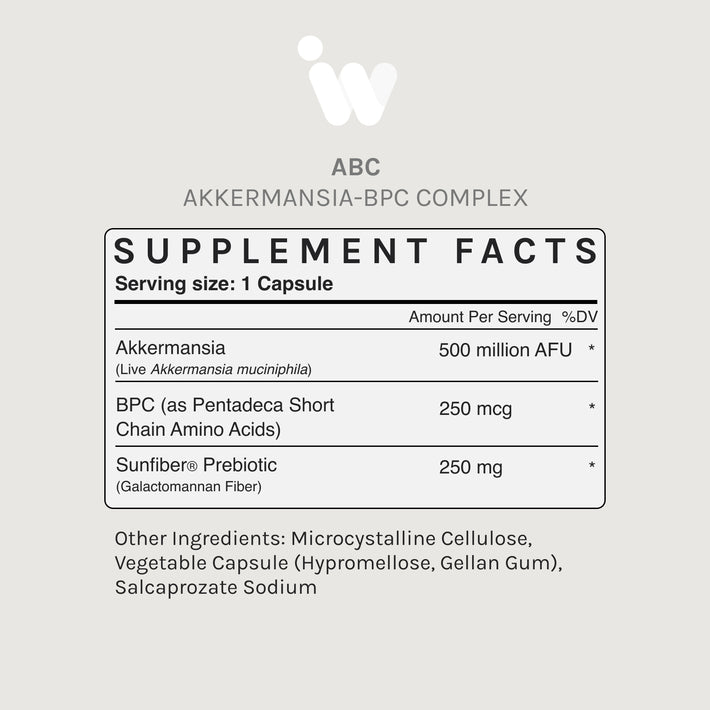
Begin with everyday habits and a clear reason for considering a product. For general gut health exploration, InfiniWell Akkermansia lists Akkermansia muciniphila and Sunfiber. That ingredient description does not establish a bloating-related result from the formula.
Start with your everyday routine
A few everyday habits do more than any single bottle. Start here:
-
Notice your triggers: Everyday factors such as eating quickly, swallowed air, and fizzy drinks can leave you feeling full or gassy, and that occasional gas is common. Noticing when discomfort shows up is more useful than assuming one ingredient is the answer.
-
Change one thing at a time: Eat at an unhurried pace, make room for regular meals, and manage stress, which can play a part in how you feel after meals.
-
Add fiber gradually: If you are broadening fiber intake, do it slowly, because prebiotic fiber can cause extra gas for some people, and keep hydration part of the plan.
-
Eat for variety: Oats, beans, lentils, vegetables, fruit, nuts, and seeds offer different nutrients and fibers, and common prebiotic foods such as garlic, onions, and bananas feed healthy bacteria in the gut. Our prebiotic-food guide has ideas to match your tolerance.
Do not use a temporary change as a reason to remove multiple food groups indefinitely. A qualified healthcare professional or registered dietitian can help you decide whether a more specific review is appropriate.
How do common supplement categories differ?
Products in this space fall into a few categories that work differently. Here is how the main ones compare:
|
Category |
What it contains or does |
Comparison question |
|
Probiotics |
Live microorganisms in a defined preparation |
Is the organism and strain identified, and what was studied? |
|
Prebiotic fiber |
Substrates used by gut microorganisms |
Which fiber is included, and how much does a serving provide? |
|
Digestive enzymes |
Proteins that act on particular food components |
Which substrate does the enzyme act on? |
|
Botanicals |
Plant-derived ingredients such as ginger or peppermint |
Is the evidence about this preparation and population? |
|
Minerals |
Nutrients such as magnesium in different forms |
What is the product's intended purpose and complete formula? |
A product containing several of them should be evaluated ingredient by ingredient, as well as as a complete formula. A longer ingredient list is not evidence of a better result, so read the product label and any proprietary blend closely.
Probiotics: Look beyond the category name
A probiotic claim needs more detail than "contains good bacteria." The organism, strain, preparation, storage requirements, and intended outcome all influence how evidence should be interpreted, and double-blind or placebo-controlled study designs carry more weight than a testimonial.
A study on one strain does not establish the same effect for a different strain or blend. More strains or a larger count is also not automatically better, and a product with multiple strains is not automatically stronger than a simpler one.
Review whether a label clearly identifies what is included and whether the supporting research applies to that preparation. Probiotics are live microorganisms that may help support a balanced intestinal microbiota of healthy bacteria rather than crowding in unwanted bacteria.
If a product is being considered to support gut health, keep that purpose distinct from a promise about bloating. No formula should be selected solely because another microbial ingredient appeared in an unrelated study, and any change can take time to notice, so follow the label's suggested use.
Fiber and prebiotics: Consider the whole diet
Fiber is not a single ingredient. Different fibers have different mixing properties, fermentation patterns, and uses in foods and supplements.
Partially hydrolyzed guar gum, often abbreviated PHGG, is a low-viscosity soluble fiber. Psyllium husk forms a thicker gel when mixed with water and is a soluble fiber that may support regularity. Prebiotics and fiber are discussed for gut balance, though high-fiber intake can add gas for some people.
Those physical differences help explain why products look and mix differently. They do not identify one universal choice for every person. Follow the specific product's preparation instructions and review total intake from food and supplements together.
Sunfiber is a branded PHGG ingredient. When it appears in a combination capsule, the amount may be quite different from the gram quantities used in a standalone fiber preparation. The ingredient name alone does not establish equivalence to a research study.
Digestive enzymes: Match the name to its role
Your body's own digestive enzymes break down food in the stomach and small intestine into nutrients it can absorb, so an enzyme supplement should have a clear purpose rather than a general claim about digestion.
Lactase acts on lactose, the natural sugar in milk and other dairy foods. Alpha-galactosidase helps break down hard-to-digest carbohydrates found in foods such as beans. That is different from a broad claim that one enzyme blend improves every part of the digestive system.
A label should make the enzyme identity clear. Enzyme activity units and the manufacturer's directions also need attention, and milligrams alone do not describe every enzyme product in the same way. Gastric motility and individual tolerance vary from person to person.
Do not assume that a product fits your routine because it uses the phrase digestive support. A qualified healthcare professional can help you evaluate whether a specific category is appropriate.
Ginger, peppermint oil, and magnesium
Ginger and peppermint appear in teas, foods, extracts, and capsules such as a peppermint oil capsule. Early research suggests ginger may support everyday digestive comfort, but evidence about a concentrated extract or a particular capsule should not be transferred to an ordinary beverage or the reverse. Fennel seeds are another botanical people ask about in this context.
Magnesium is a mineral, not a probiotic or a digestive enzyme. Some forms of magnesium draw water into the intestines, which is why they are linked with regularity, though the evidence for everyday bloating is limited. Products use different forms, so talk to a qualified healthcare professional before adding it rather than choosing it only because it appears on a list of supplements for bloating.
For all three, keep the question specific: what is in the product, what was studied, and is that evidence relevant to the proposed use? This article does not recommend a botanical, a peppermint oil product, or a mineral as a universal solution.
Everyday habits that support healthy digestion
Day-to-day habits often do more for digestive health than any single bottle. Eating slowly, including some fats with a balanced meal, staying active, and getting enough sleep all help the body feel comfortable and support healthy digestion over the long run.
Occasional bloating is a normal part of life for most people, so a helpful first step is noticing which meals or habits line up with how you feel rather than treating every change as a problem. If symptoms are frequent or do not settle, a qualified healthcare professional can help you look further.
Where does Akkermansia fit?
InfiniWell's Akkermansia formula combines a microbial ingredient with Sunfiber. These are two distinct components. Our Akkermansia background article introduces the organism separately.
Review the full label, including other ingredients and suggested use, if you are exploring general gut-wellness options. The presence of Akkermansia or Sunfiber does not make this supplement form interchangeable with another probiotic or fiber product. It also does not establish a bloating-relief claim.
Questions to bring to a product review
-
What is the specific reason I am considering this product?
-
Which ingredients overlap with my current routine and other medications I take?
-
Does the cited evidence use the same preparation and amount?
-
Are the claims about the finished formula or only about an ingredient?
-
Would a food or dietary change be a more practical starting point?
Bring the actual product label to the discussion. That keeps the review focused on what you would use, rather than a broad ingredient category.
For persistent or unexpected discomfort, consult a qualified healthcare professional rather than continuing to add products, since staying healthy over the long term is easier when the routine is understandable.
Choose gut support with a clear goal
If you are weighing InfiniWell's Akkermansia formula or any gut-wellness supplement, start with the label and your everyday routine, and keep general gut support separate from treating a symptom.
Match an ingredient to a specific reason, add one change at a time, and check with a qualified healthcare professional when discomfort is persistent.
Supplements for bloating: FAQs
-
SOURCES
Products mentioned in this article

You May Also Like
View All Articles

Peptides for Hair Growth: A Guide to Cosmetic Scalp Care
Peptides for hair growth get discussed as if they all do the same thing, but the ingredients and the evidence differ. This guide compares GHK-Cu, zinc thymulin, and PTD-DBM as cosmetic scalp care, and explains what the research can and cannot show.

Is InfiniWell Legit? What to Know Before You Buy
InfiniWell combines third-party testing, GMP manufacturing, accessible Certificates of Analysis, and customer feedback to help shoppers evaluate the brand. This guide looks at these quality standards, independent reviews, and other factors to consider before buying an InfiniWell supplement.