





























































NMN Supplement Forms Compared: Sublingual, Powder, Capsules, or Liposomal?

Key takeaways
-
Nicotinamide mononucleotide (NMN) occurs naturally in the body and serves as a building block for NAD+, which cells rely on for normal energy production.
-
Sublingual NMN is held under the tongue, where compounds may be absorbed through the oral tissues rather than passing entirely through the digestive system.
-
In one published head-to-head study, sublingual NMN produced earlier changes in certain NMN-related metabolites, but researchers found no measurable advantage over oral NMN in circulating NMN, nicotinamide, or NAD+.
-
Oral NMN capsules are the format used in many human studies, with research reporting changes in blood NAD+ levels after several weeks of regular use.
-
Current research has not established that one form of NMN provides better long-term results than another. Consistency, third-party testing, and personal preference may be more useful factors when choosing an NMN supplement.
NMN comes in several forms, but does one offer an advantage over the others?
Recent research has given us the first direct human comparison of oral and sublingual NMN, while other formats come with their own considerations.
Here's what the evidence tells us so far and what to consider when choosing an NMN supplement.
The forms of NMN you'll find on the shelf
Walk through any longevity catalog, and NMN typically shows up in four forms:
-
Oral capsules are the most familiar. You swallow them, and the contents pass through the digestive system.
-
Sublingual NMN comes as a tablet, lozenge, or powder you hold under the tongue and let dissolve.
-
NMN powder is a loose form that can be mixed into water or another beverage.
-
Liposomal products package NMN within tiny lipid-based structures called liposomes, a delivery method designed to help protect the ingredient as it moves through the digestive system.
If some of these terms are new, understanding what NMN is and the relationship between NMN and NAD+ can help put the differences between these forms in context.
How sublingual absorption is supposed to work
The tissue under your tongue is thin and contains a dense network of blood vessels. Compounds that cross this tissue can enter the bloodstream without first passing through the digestive system and liver. A 2025 review of oral mucosal delivery explains that these characteristics can make the sublingual route useful for compounds suited to absorption through the oral mucosa.
That same review points to some limitations. Not every compound is easily absorbed under the tongue. How well this works depends partly on the compound itself, while saliva and limited contact time can make absorption less predictable.
Sublingual delivery makes sense in theory, but that doesn't necessarily mean NMN works better when taken this way. The first human study to compare sublingual and oral NMN directly found no clear advantage for either route, as we'll see below.
What happens when you swallow NMN instead
Oral NMN is the most common form used in human research, giving us a much larger evidence base for this route than for sublingual NMN. Exactly how NMN is absorbed and processed after you swallow it is still being studied.
What we do know is that oral NMN produces measurable changes in the bloodstream. In an Endocrine Journal study of 10 healthy men, single oral servings of 100, 250, and 500 mg affected levels of two NMN-related metabolites over the following five hours, with larger amounts generally producing greater changes.
Longer studies provide evidence for changes in NAD as well. A 60-day placebo-controlled trial involving 80 healthy middle-aged adults found higher blood NAD concentrations in all three oral NMN groups at days 30 and 60 compared with placebo.
What the head-to-head research shows
The Scientific Reports crossover trial gives us the first direct human comparison of oral and sublingual NMN. Fourteen healthy men took NMN orally in one round and sublingually in another, with eight days between the two. Researchers then tracked changes in their blood for 60 minutes after each serving.
Sublingual NMN led to a faster rise in two downstream metabolites, 2PY and 4PY. But NMN, nicotinamide, and NAD+ levels did not differ significantly between the two routes.
That distinction is important. The change in metabolites suggests the two routes may be processed differently, but it doesn't show that sublingual NMN delivers more NMN or NAD+ to the bloodstream. The researchers also couldn't determine exactly where the differences in those metabolites came from.
The study was small and followed participants for only an hour, so it can't tell us how the two forms compare with regular, long-term use.
Where liposomal delivery fits
Liposomal NMN takes a third approach. Instead of avoiding the digestive tract, it tries to survive it. Liposomes are lipid bubbles that surround the ingredient, and research on lipid-based nutraceutical delivery shows that these systems can help protect certain compounds during digestion and influence how they're absorbed.
That principle has support across a range of nutrients, but human research on liposomal NMN specifically is still limited. For now, liposomal delivery is a reasonable formulation choice, but there isn't enough evidence to say it's better than standard oral NMN.
InfiniWell's Cellular Energy Pro uses liposomal NMN delivery, while our standard NMN supplement comes in oral capsules.
NMN powder vs. capsule
Powder offers flexibility in how you take NMN. You can mix it into water or another beverage, which may appeal to people who don't want to swallow capsules. The tradeoff is that you have to measure each serving and pay closer attention to storage and handling.
Capsules keep things simpler. Each serving is pre-measured, with no mixing or measuring required. For daily use, the choice often comes down to preference. Powder offers more flexibility, while capsules offer more convenience and consistency from one serving to the next.
Formats at a glance: NMN sublingual vs. oral, powder, and capsule
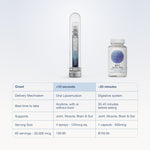
No NMN format has emerged as the clear winner. Oral NMN has the strongest human research base, while sublingual, powder, and liposomal forms offer different approaches to delivery and convenience.
|
Format |
How it's taken |
What the research tells us |
Main consideration |
|
Oral capsules |
Swallowed |
Most widely studied format in human NMN research; studies have reported changes in blood NAD+ markers |
Pre-measured and easy to use consistently |
|
Sublingual NMN |
Held under the tongue to dissolve |
One published head-to-head human trial found no significant advantage over oral NMN for blood levels of NMN, nicotinamide, or NAD+ |
Requires time under the tongue; saliva and contact time can affect the process |
|
NMN powder |
Mixed into water or another beverage |
Human NMN research includes oral administration, but evidence does not establish loose powder as superior to capsules |
Requires measuring and mixing each serving |
|
Liposomal NMN |
Usually swallowed in a liposomal formulation |
Liposomal delivery has research support for certain compounds, but human research specific to liposomal NMN remains limited |
Designed to help protect the ingredient during digestion |
So, what's the best form of NMN to take?
Oral NMN capsules currently have the strongest human research base of the formats covered here, and capsules provide a pre-measured serving without mixing or holding a product under the tongue. That doesn't mean capsules have been proven superior. They simply have a larger human research base behind them.
Sublingual NMN may appeal to people who prefer not to swallow capsules, while powder offers flexibility and liposomal NMN uses a different approach to delivery. So far, however, there isn't enough human research to say whether one format offers better long-term results.
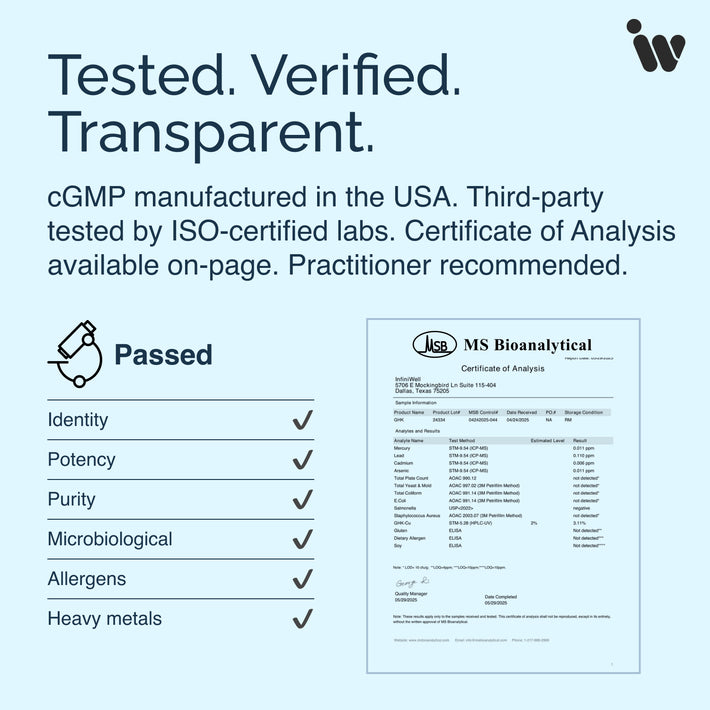
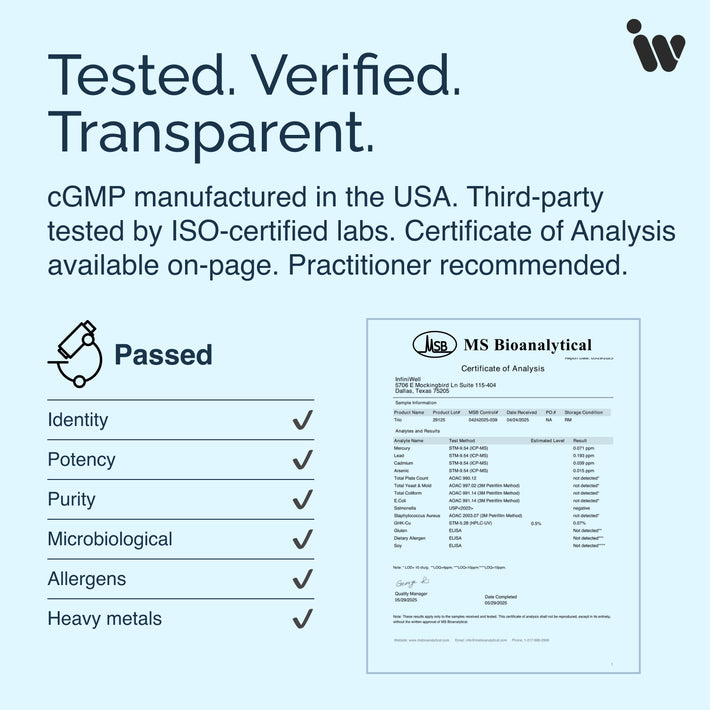
Whatever form you choose, focus on product quality. Look for a current Certificate of Analysis showing independent testing for identity and purity, a Supplement Facts panel that clearly lists the amount per serving, and clear storage instructions.
For a broader look at the category, explore our healthy aging supplements or read our NMN and longevity guide.
Sublingual NMN vs. oral: FAQs
-
SOURCES
Products mentioned in this article


You May Also Like
View All Articles

NMN and TMG: Why Are They Often Taken Together?
NMN and TMG are frequently paired together to support cellular energy and methylation, but is the combination necessary? Discover the science behind how these two popular supplements interact in your body and what to consider before adding them to your wellness routine.

NMN vs. NR: Comparing Two Popular NAD+ Precursors
NR and NMN both support NAD+ production, but current human research hasn't established that one is clearly better. See how they differ, what head-to-head studies have found, and what to consider when comparing them.