









Key takeaways
-
GHK-Cu, zinc thymulin, and PTD-DBM are different ingredients, not interchangeable names.
-
Copper peptides have the strongest hair-specific evidence of the group, but most of it is lab and animal research.
-
Cell and animal experiments can explore follicle biology without proving a human cosmetic result.
-
Ingredient research does not establish the effects of a finished serum.
-
The appearance of fuller hair is separate from measured hair density or growth rate.
-
Product directions, a patch test, the full ingredient list, and a manageable routine should guide cosmetic use.
Peptides for hair growth is a common search phrase, but cosmetic scalp care and demonstrated hair growth are different claims.
This guide is written for healthy adults who are curious about hair growth peptides, and peptide serums can be discussed in terms of scalp care and the appearance of fuller hair without implying that they create follicles or change the number of hairs on your head.
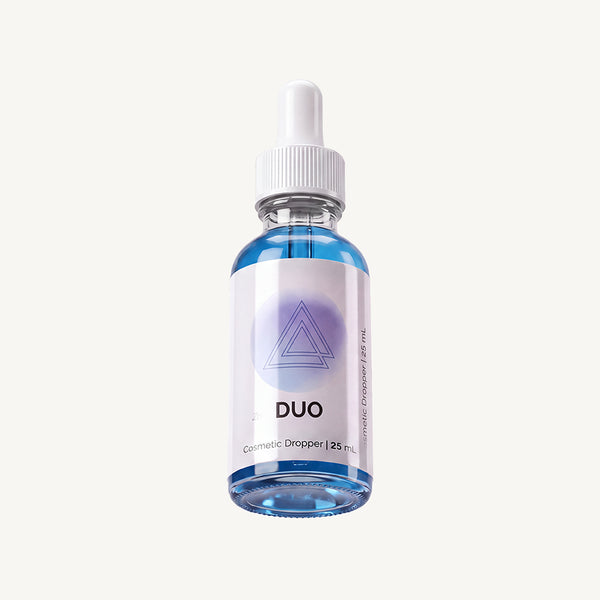
DUO copper peptide scalp serum combines GHK-Cu and zinc thymulin. It is one cosmetic ingredient approach, and PTD-DBM with methyl vanillate is another. Understanding those names, the type of evidence behind them, and the complete formula helps you compare products with clearer expectations.
Browse InfiniWell's hair and scalp collection for cosmetic options, then compare each product's complete label and intended role.
What are hair peptides?
Peptides are chains of amino acids. Their sequence, length, and other chemical features help determine their identity. Some are a naturally occurring tripeptide paired with a copper ion, which adds another distinction when comparing ingredient names.
The phrase hair growth peptides groups together ingredients discussed in scalp and hair research. It does not mean they all act in the same way or have the same evidence. A study on one peptide cannot validate every product marketed in that category.
For topical products, the rest of the formulation also deserves attention. The ingredients carrying a peptide, the concentration, product stability, whether it is a water-based formula, and application directions can differ. A familiar peptide name on the front label therefore tells only part of the story.
Our guide to choosing a scalp serum provides a broader comparison framework. Start with the product's intended cosmetic role, then examine the evidence behind any more specific claim.
Scalp care, fullness, density, and growth are different
Hair can look fuller because of hair shaft diameter, hair thickness, texture, length, styling, or how scalp hair lies against the scalp. Those changes in appearance are different from a measured increase in hair density.
|
Term |
What it describes |
What should not be inferred |
|
Scalp care |
A routine for the scalp and its condition |
A change in follicle number |
|
Fuller-looking hair |
A cosmetic appearance |
Increased measured hair density |
|
Hair shaft thickness |
The diameter of an individual hair |
Faster lengthening |
|
Hair density |
Hairs within a defined scalp area |
The width of each strand |
|
Growth rate |
Change in hair length over time |
A result from every peptide serum |
A photo is not automatically a measurement of any one of these. Lighting, part placement, wetness, and styling can change how much scalp is visible. Keep that distinction in mind when looking at before-and-after images or customer experiences.
Copper peptides for hair: What the research shows
Among the peptides discussed for hair, copper peptides have the most research behind them, though most of it is preclinical. Here is what that evidence does and does not say:
-
What GHK-Cu is: GHK refers to the amino-acid sequence glycine-histidine-lysine, and the Cu identifies copper, so GHK-Cu is a naturally occurring tripeptide joined to a copper ion. It has the strongest hair-specific evidence in the group and is often described as the only compound in it with repeated hair-specific research.
-
Lab and animal findings: A 2023 GHK-Cu formulation study explored topical GHK-Cu in follicle biology, including follicle size, the anagen phase of the hair growth cycle, new blood vessel formation and scalp blood flow around the follicle, and signals such as vascular endothelial growth factor. Separate gene-expression research on GHK suggests the peptide can influence the activity of over 4,000 human genes, alongside work on structural proteins such as collagen in dermal papilla cells.
-
Not human outcomes: These are laboratory and animal findings about experimental systems, not a measured change in hair follicle size or the number of hairs in people.
-
Tolerability: For topical use, copper peptides generally do not pose major risks, though side effects are possible and long-term human data for hair remains limited.
-
Watch similar names: AHK-Cu is not GHK-Cu. A different amino acid means a different sequence, so evidence for one should not be assigned to the other. Copper peptide formulations and copper peptide use also differ by concentration and delivery, and systemic exposure from a topical cosmetic is a separate question from a serum's appearance outcome.
DUO pairs GHK-Cu with zinc thymulin. The label identifies that combination. It does not, by itself, establish that the two ingredients produce a measured combined effect beyond either ingredient alone.
Zinc thymulin: A separate ingredient approach
Zinc thymulin is a peptide-mineral complex. Its inclusion alongside a copper-binding peptide does not make the two ingredients identical, and the name does not establish a universal hierarchy between them.
When reading an ingredient study, check how it was designed. A small pilot can be useful for planning further work, but it does not provide the same certainty as controlled clinical data. Without a suitable comparison group, changes over time can have several explanations.
Also ask whether the research preparation matches the serum under discussion. Concentration, other ingredients, and application procedures can differ. If those details are missing, the safest conclusion is that the study and the finished product should be assessed separately.
This article does not transfer condition-specific zinc-thymulin findings to DUO. The product discussion stays within cosmetic scalp care and hair appearance.
PTD-DBM and methyl vanillate
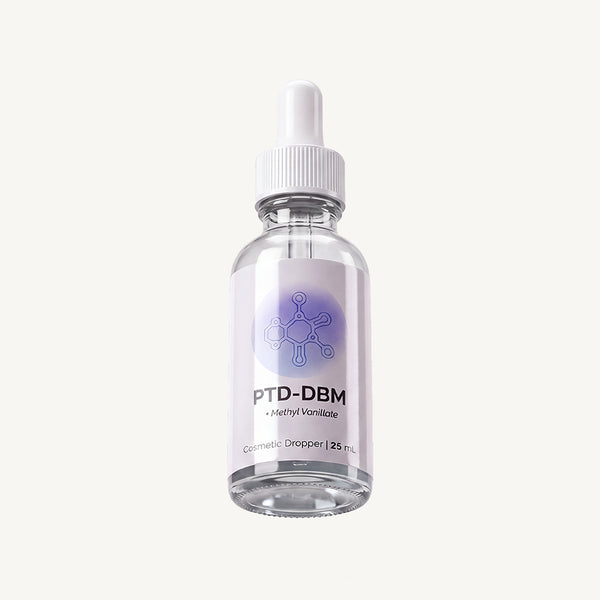
PTD-DBM with methyl vanillate is a different cosmetic formula from DUO. PTD-DBM appears in research about cellular signaling, while methyl vanillate is a separate ingredient in the product. A proposed mechanism is background information, not a demonstrated result from the finished serum.
You may encounter pathway names such as Wnt when reading peptide research. A pathway describes a network of signals studied by scientists. It does not tell you that a product will change that pathway in your scalp or produce a particular appearance outcome.
For more ingredient background, see what PTD-DBM is. Keep the experimental model attached to the finding: cultured cells, animal tissue, and a study in people answer different questions.
It is also useful to distinguish an ingredient pairing from a proven synergy claim. Listing PTD-DBM and methyl vanillate together tells you what the formula contains. Establishing a combined advantage would require research designed to test that comparison.
What can follicle biology explain?
Hair follicles contain several interacting cell populations. Dermal papilla cells sit near the base of a hair follicle and participate in signaling within that environment. The hair growth cycle moves through phases, and the anagen phase is the active growth phase, when the follicle produces the hair shaft and cells that produce melanin give it color.
These terms describe hair biology and follicle cycling that researchers examine, but they do not establish a serum result in a person.
A change in a cultured dermal papilla cell is a laboratory observation about the structural integrity of a model system. It is not the same as a change in a complete hair follicle, and neither is automatically the same as a cosmetic result across a person's scalp hair.
Each step needs evidence appropriate to that setting, and in general hair biology, a healthy hair growth cycle includes normal daily shedding as older hairs are replaced.
The 2023 GHK-Cu formulation study above is a good example: it investigated a specialized ionic-liquid microemulsion in preclinical systems, so the preparation and experimental setting are central to interpreting it. It was not a human trial of DUO, and it does not establish that every GHK-Cu serum has the same delivery properties.
How strong is the evidence for a peptide claim?
Evidence is more useful when you know what question it can answer. A laboratory finding can explain why researchers are interested in a molecule, but it cannot settle every question about a consumer product, and the strongest evidence for a cosmetic claim is research on the finished serum itself.
|
Evidence type |
Useful for |
Limitation |
|
Cell experiment |
Exploring an interaction or signaling pathway |
Cells in a laboratory are not a complete scalp routine |
|
Animal experiment |
Investigating biology in a living system |
Results do not automatically apply to people |
|
Small human pilot |
Testing feasibility and generating questions |
Limited size or lack of a control can restrict interpretation |
|
Controlled human study |
Comparing a defined preparation with a comparator |
Findings remain specific to the preparation and outcomes |
|
Customer photograph |
Showing an individual experience |
Lighting, styling, and other changes are not controlled |
An ingredient study is also different from a finished-product study. To support a claim about a serum, the clinical data needs to be relevant to that serum, its use, and the outcome described. Several separate ingredient studies do not automatically add up to a trial of the combination.
What would a useful human study measure?
A clear study would define the product, the participants, how it was used, the comparison group, and the outcome before drawing conclusions. If the claim is cosmetic fullness, the measurement should address appearance. If the claim is hair count, an appearance rating alone is not enough.
Consistent photography can be part of research, but it should control the angle, distance, lighting, hair preparation, and part placement. A comparison with different styling can make a modest difference look much larger.
Timing also needs context. A study's observation period is not a guarantee that a reader will notice a change on the same schedule. This article does not provide a results countdown for DUO, PTD-DBM, or peptide serums as a category.
Compare the complete cosmetic formula
Work the comparison as a short checklist rather than a single claim on the front of the bottle. These questions help:
|
Question |
Why ask it? |
|
Which peptide is identified? |
Similar names can describe different sequences |
|
What else is in the formula? |
The full ingredient list is relevant to product selection |
|
Is the concentration disclosed? |
Do not infer it from a study or a different product |
|
What does the label direct? |
Application instructions belong to the specific formula |
|
What does the evidence measure? |
Appearance, diameter, density, and growth rate differ |
|
Is the claim about this finished product? |
Ingredient rationale is not a product trial |
Do not assume that every serum containing the same peptide is equivalent. Likewise, a concentration alone does not identify a universally better product. The formulation and evidence need to be considered together.
If the information you need is not available, ask the manufacturer. It is better to leave a detail unresolved than to fill it in from another brand's label or an unrelated experiment.
Build a simple scalp-care routine
Keep a scalp-care routine simple enough to judge how your scalp responds. A few habits help:
-
Fit it to your routine: Choose products that fit your ordinary cleansing and styling routine and support a comfortable scalp environment. Handle hair gently, avoid unnecessary pulling, and use application instructions that match the product. More pressure or more product is not evidence of a better result.
-
Patch test first: Before using a new cosmetic, run a patch test on a small area and review the full label. A patch test does not guarantee that a product will suit every person, but introducing one change at a time makes the routine easier to understand.
-
Mind the rest of the formula: Some scalp products also include botanical extracts such as rosemary oil. Treat those as part of the cosmetic formula rather than a separate claim.
-
Keep expectations cosmetic: Focus on scalp care and the appearance of hair. GHK-Cu and related copper peptides are also studied in skin care contexts, a reminder that ingredient research spans more than one use. If you have persistent scalp or hair concerns, talk with a qualified healthcare professional rather than treating a cosmetic comparison as individual guidance.
How to compare your own photographs
Use the same light source, camera distance, angle, part, and dry-hair condition. Record changes in length, coloring, and styling products. Otherwise, the comparison may show a different presentation rather than a change in the hair itself.
Consider taking occasional photographs rather than checking repeatedly throughout the day. The purpose is a consistent record, not a daily score. A fuller-looking photo does not isolate which part of the routine contributed to the appearance, and stronger-looking hair in one image is still an appearance, not a measurement.
Choose with clear expectations
Compare DUO and PTD-DBM with methyl vanillate as cosmetic scalp-care options. Precise ingredient names, a complete label, and a manageable routine provide a stronger basis for comparison than broad promises attached to the word peptide.
Peptides for hair growth: FAQs
-
SOURCES
You May Also Like
View All Articles

Hair Density vs. Thickness: What's the Difference?
Hair density is how many strands you have, and hair thickness is how wide each strand is. They sound similar, but they're two different things, and mixing them up leads to the wrong styling and product choices. Here's how to tell them apart and work with what you've got.