








Key takeaways
-
Hair density is the number of strands per square inch of scalp, and hair thickness is the width of each individual strand.
-
You can have high-density hair with fine strands, or low-density hair with coarse ones, so the two don't move together.
-
Two quick at-home checks, scalp visibility and ponytail circumference, give you a rough read on your density.
-
Density is largely genetic, so you can't change the number of follicles you have, but cuts, products, and scalp care can change how full your hair looks.
-
Scalp serums like DUO are cosmetic scalp care for fuller-looking hair, not a way to add strands.
Hair density and hair thickness get used as if they mean the same thing, and they don't. Density is how many strands grow on your head, thickness is how wide each one is, and knowing which is which changes how you style your hair and what you reach for, including cosmetic scalp care like DUO copper peptide scalp serum.
This guide is for anyone trying to understand their own hair type: the difference between the two, how to check yours at home, and how to style low-, medium-, or high-density hair.
Hair density vs. thickness at a glance
The quickest way to keep the two straight is to see them side by side. Density counts strands, thickness measures the width of one strand, and each is checked a different way.
Feature |
Hair density |
Hair thickness |
What it describes |
The number of hairs in a defined scalp area |
The diameter of an individual strand |
Common descriptions |
Low, medium, or high density |
Fine, medium, or coarse strands |
How to check it |
Scalp visibility and ponytail circumference |
Comparing a single strand with a piece of thread |
What a photo can't show |
A reliable count without standardized measurement |
The exact hair diameter |
In everyday talk, "thick hair" sometimes means a full head of hair, which blurs the line. When you're reading research or a product claim, it helps to clarify which one is meant, because a product that changes how strands look is making a different claim from one about the number of hairs you have.
What is hair density?
Hair density refers to the number of hairs per square inch of your scalp. To determine it reliably you need a defined area and a consistent method, so a casual photo can show appearance without giving you a real count. Density also varies from person to person and across different areas of the same head, and low density simply means fewer hair strands in a given patch.
Genetics sets most of your natural density, so you can't change the number of hair follicles you have. Published figures on scalp hair put the average adult at roughly 80,000 to 120,000 hairs, with density varying by age and background. There's no single ideal number that's right for everyone.
Low, medium, and high are the three categories people use as handy styling labels. They work best as a general sense of your hair type, not as a clinical verdict from a quick online quiz, and dense hair simply means more hairs packed into the same area.
What is hair thickness?
Hair thickness describes the width, or hair diameter, of a single strand. Fine and coarse refer to that width of individual hair strands, not to how many strands you have. That's why fine strands can be numerous and thick strands can be spread further apart.
How a strand feels is only a rough guide. Comparing one naturally shed strand with a piece of thread can help you picture relative width, but thread varies, so it isn't a precise measurement. There's no need to pull hairs out to test this.
Research names each measurement precisely, and it's worth doing the same. A small 2016 study of scalp massage in nine healthy men measured strand thickness, hair number, and growth rate as separate things, and strand thickness rose over 24 weeks. A finding about one of those measurements isn't proof about the others, which is exactly why it helps to keep density and thickness separate.
How can you check density at home?
You don't need special tools for a rough read. Two simple checks, done in consistent conditions, give you a useful sense of where your density sits.
-
Scalp visibility: Look at dry hair in even lighting with your usual part, using a mirror to see the parted area. If you can easily see your scalp, your density is likely on the lower side; if the scalp is hard to see, it's likely higher.
-
Ponytail circumference: Gather your hair into a ponytail and measure around it. Under 2 inches points to low density, 2 to 3 inches to medium, and about 4 inches or more to high.
-
Repeat under the same conditions: Wet or product-heavy hair clumps into sections and changes scalp visibility without changing your actual count, so compare like with like.
For a precise assessment, a qualified professional can use magnified methods such as trichoscopy, which uses a magnifying device to examine the scalp. At-home checks and professional measurements answer different levels of question, and both have their place.
What can a ponytail measurement tell you?
A ponytail measures the whole bundle, which depends on strand width, length, texture, and how you gather it. It doesn't isolate the number of hairs per scalp area, so treat it as one styling clue rather than a precise count.
Online circumference cutoffs are a convenient shorthand, not hard boundaries between density categories. A different haircut or a different gathering method can shift the number, and it's especially hard to compare once length or layers change.
Styling choices for different densities
Your density affects which cuts and products suit you, so it's worth styling with it rather than against it. These are appearance choices you can talk through with a stylist, not ways to change your follicle number.
-
For a fuller appearance: Low-density hair tends to look fuller with blunt cuts, a different part, and lightweight volumizing products that add volume without weighing strands down or looking greasy.
-
For less visual bulk: High-density hair often benefits from graduating layers, or layered cuts, and heavier styling products placed thoughtfully to manage volume.
-
For variety: Medium-density hair is flexible and allows for a wide range of hairstyles and styling techniques.
-
For a simpler routine: Fewer products, chosen for your actual hair type, usually beat piling on everything labeled volumizing.
Heavy products aren't automatically wrong, and lightweight ones aren't universally best. Amount and placement drive the result, so it's smart to start with a manageable hair care routine and adjust. A stylist can factor in face shape, texture, length, and how much time you want to spend.
Why can hair look fuller without a density change?
Cut, texture, styling, and how strands group together all affect visible volume. A new part can reveal a different area, and a change in lighting can shift the contrast, so hair can look fuller without a single extra strand. Those cosmetic differences are useful on their own, and they don't prove a change in the number of hairs.
If you compare before-and-after photos, keep the light, angle, distance, part, and dry-hair condition the same, and note any change in cut, color, or products. Otherwise the comparison is mostly about presentation, not a real change in density.
Where do scalp serums fit in?
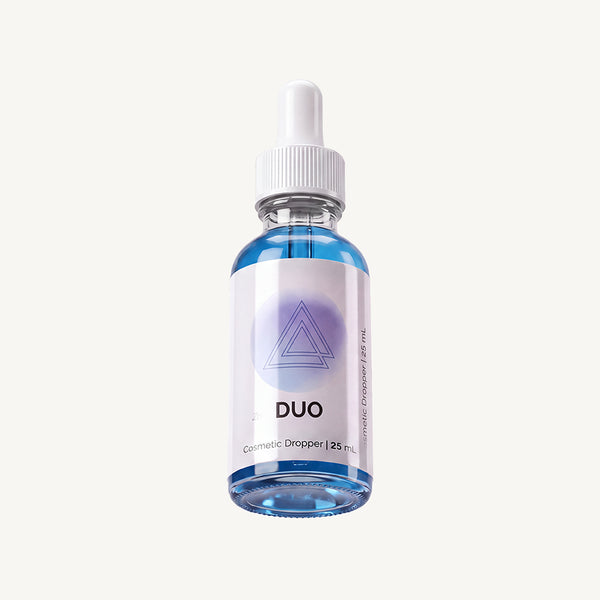
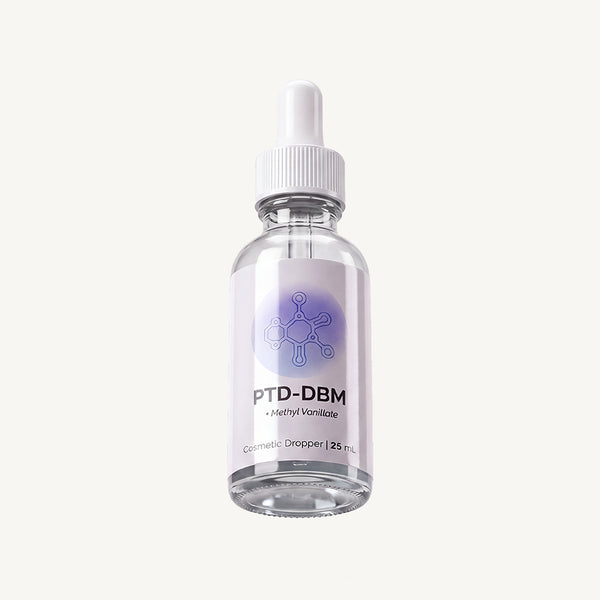
Scalp care is its own step, separate from your cut and styling. InfiniWell's DUO copper peptide scalp serum combines GHK-Cu with zinc thymulin, and the PTD-DBM scalp serum uses PTD-DBM with methyl vanillate. Both are cosmetic scalp care aimed at a healthy scalp and fuller-looking hair.
Compare the complete labels and the application directions rather than assuming an ingredient approach guarantees a result. Our guide on how to choose a scalp serum walks through what to look at, and our overview of peptides for scalp wellness covers the broader category. Keep the purpose within scalp care and appearance, and if a hair or scalp change persists or concerns you, talk with a qualified healthcare professional.
Work with the hair you have
Density and thickness are two separate things: density is how many strands you have, thickness is how wide each one is, and both are set largely by genetics. What you can shape is how full your hair looks through the right cut, the right amount of product for your type, and steady scalp care.
When you're ready to add a cosmetic step, browse InfiniWell's DUO copper peptide scalp serum and read the label before you start.
Hair density: FAQs
-
SOURCES
Products mentioned in this article
You May Also Like
View All Articles

Scalp Massage for Hair Growth: What the Research Says
Scalp massage is one of the simplest habits you can add to a hair care routine, and the research behind it is more modest than the headlines suggest. Here's what the studies measured, how to massage your scalp gently, and where cosmetic scalp serums fit in.