






































































Key takeaways
-
Longevity supplements are studied for their effects on specific aspects of healthy aging, such as NAD+ levels, muscle function, metabolic health, and cellular processes, not for their ability to extend human lifespan.
-
NAD+ precursors such as NMN have several human trials behind them, although many studies are relatively small and short in duration.
-
Senolytic compounds such as fisetin have shown promising results in laboratory and animal research, while evidence from human trials remains limited.
-
Akkermansia muciniphila, AC-11 cat's claw extract, and epicatechin have also been studied in humans, but the evidence varies considerably by ingredient and outcome.
-
When comparing longevity supplements, look beyond the ingredient name. Consider the amount used, formulation, quality testing, and strength of the human evidence behind it.
In 2012, researchers measured NAD+ in skin samples from 49 people, from newborns to a 77-year-old. They found that NAD+ levels declined with age, adding to the evidence that some cellular processes change as we get older.
Findings like this have helped drive interest in nutrients and compounds that may support healthy aging. But the research can be easy to overstate.
No longevity supplement has been shown to make humans live longer. Instead, research tends to focus on more specific outcomes, including biomarkers, cellular processes, and measures of physical function that can change with age.
This guide looks at five ingredients from that perspective, what each may support, what human studies have found, and where the evidence remains limited.
What are longevity supplements?
Longevity supplements contain ingredients studied for their potential to support biological processes associated with healthy aging, from cellular energy production and DNA maintenance to gut, muscle, and vascular function.
Because the term covers products with very different ingredients and purposes, it makes more sense to look at what each ingredient may support and the evidence behind it.
For a more detailed exploration of the category, see our anti-aging overview. Here, we focus on specific longevity ingredients and what the research says about them.
What can longevity supplements realistically support?
Research on longevity ingredients typically evaluates outcomes that can be measured over weeks to months. Depending on the ingredient, researchers may measure biomarkers such as blood NAD+ levels, changes in cellular or metabolic markers, measures of physical function, or tolerability.
These outcomes can tell us whether an ingredient affects a specific marker or aspect of healthy aging. The evidence also varies considerably from one longevity ingredient to another.
5 longevity supplement ingredients and the evidence behind them
Each ingredient below targets a different aspect of healthy aging. Here's what researchers have studied, what human trials have found, and what we still don't know.
|
Ingredient |
Area of healthy aging |
What human research has studied |
Evidence snapshot |
|
NMN |
Cellular energy |
NAD+ levels, walking speed, grip strength |
Several human trials, but studies are generally small and short |
|
Fisetin |
Cellular quality control |
Senescent cells and age-related outcomes |
Stronger laboratory and animal evidence; human evidence is still developing |
|
Akkermansia |
Gut and metabolic health |
Metabolic markers and tolerability |
Small human trials, with results differing between live and pasteurized forms |
|
AC-11 |
DNA maintenance |
Cellular responses related to everyday DNA stress |
Limited human evidence from a small study |
|
Epicatechin |
Muscle and vascular function |
Grip strength, vascular responses, and exercise-related outcomes |
Small human studies with mixed findings |
NMN for cellular energy
Nicotinamide mononucleotide (NMN) is a direct precursor to nicotinamide adenine dinucleotide, or NAD+, a coenzyme that the cells use for energy production and metabolism. NAD+ also supports the activity of sirtuins, enzymes involved in DNA maintenance and other cellular processes.
Because NAD+ levels appear to change with age, researchers are studying whether providing precursors such as NMN can help maintain NAD+ availability.
Human trials have begun to provide some evidence, although the studies remain relatively small and short. In a 60-day NMN trial, 80 healthy adults aged 40-65 took 300, 600, or 900 mg of NMN daily. Blood NAD+ concentrations rose in all three NMN groups by day 30. A separate 12-week NMN study in men over 65 reported gains in walking speed and grip strength, although the authors described the findings as exploratory.
Note that these studies show changes in specific biomarkers and measures of physical function, not the long-term effects of NMN on healthy aging. Furthermore, the relationship between aging and NAD+ is more complex than a uniform decline across every tissue. A review of NAD+ research found that human evidence varies by tissue and study population.
For those considering NMN as part of a healthy aging routine, InfiniWell offers an NMN supplement with 200 mg of nicotinamide mononucleotide per two-capsule serving, alongside resveratrol and pterostilbene.
Fisetin for cellular quality control
As cells age, some enter a state called cellular senescence, in which they stop dividing but remain metabolically active. Research shows that senescent cells accumulate in various tissues with age. Senolytics are compounds researchers are studying for their potential effects on these cells.
Fisetin, a flavonoid naturally present in foods such as strawberries, is one of the plant-derived compounds being investigated as a senolytic. In a 2018 fisetin study, researchers found that fisetin reduced markers of cellular senescence and extended median and maximum lifespan in aged mice. Experiments using human adipose tissue in the laboratory also showed reductions in senescent cells.
For fisetin, much of the evidence supporting senolytic activity still comes from animal and laboratory research. Researchers have also been evaluating fisetin in older adults in a fisetin clinical trial, but published human evidence remains limited.
InfiniWell's Senolytic combines 100 mg of fisetin with 400 mg of quercetin, plus resveratrol, pterostilbene, and curcumin. Our senolytics and autophagy guide takes a closer look at the research behind these cellular processes.
Akkermansia for gut health
The gut microbiome changes with age, and one bacterium that has attracted particular interest is Akkermansia muciniphila. In a centenarian microbiome study, researchers found Akkermansia among the bacterial groups enriched in people over age 105. Akkermansia muciniphila naturally lives in the mucus layer of the gut and is being studied for its potential role in supporting gut and metabolic health.
One of the key human studies is a human Akkermansia trial involving 40 adults. Participants received live Akkermansia muciniphila, pasteurized Akkermansia, or placebo daily for three months. Both forms were well-tolerated, while researchers reported changes in several metabolic markers, with many of the notable findings occurring in the pasteurized group.
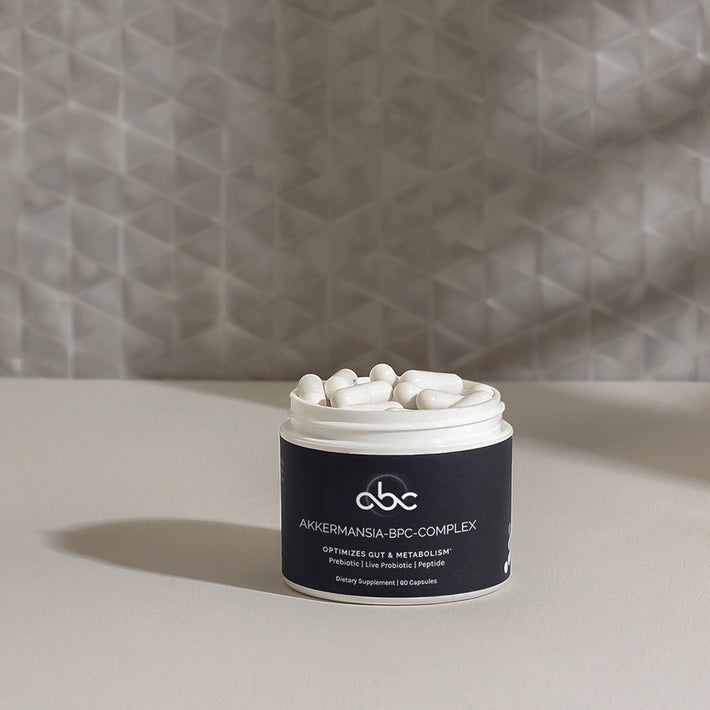
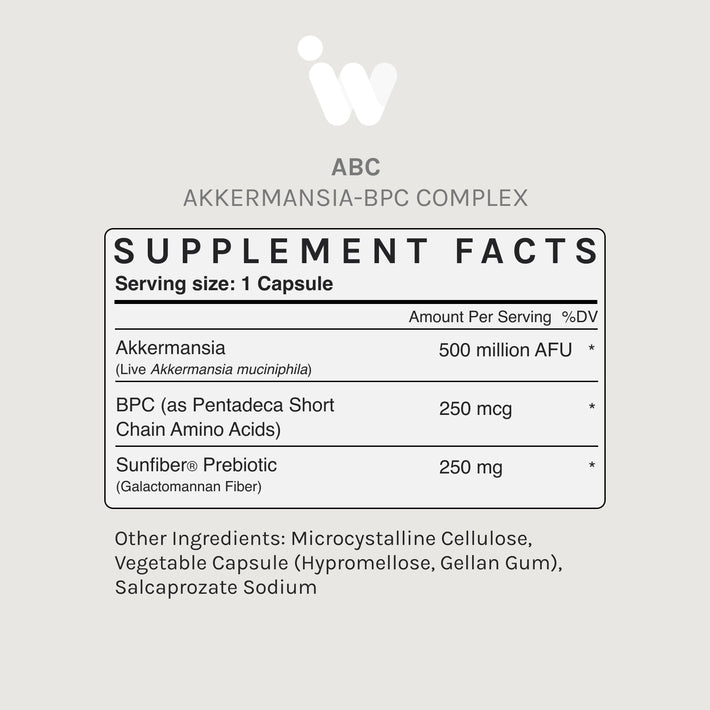
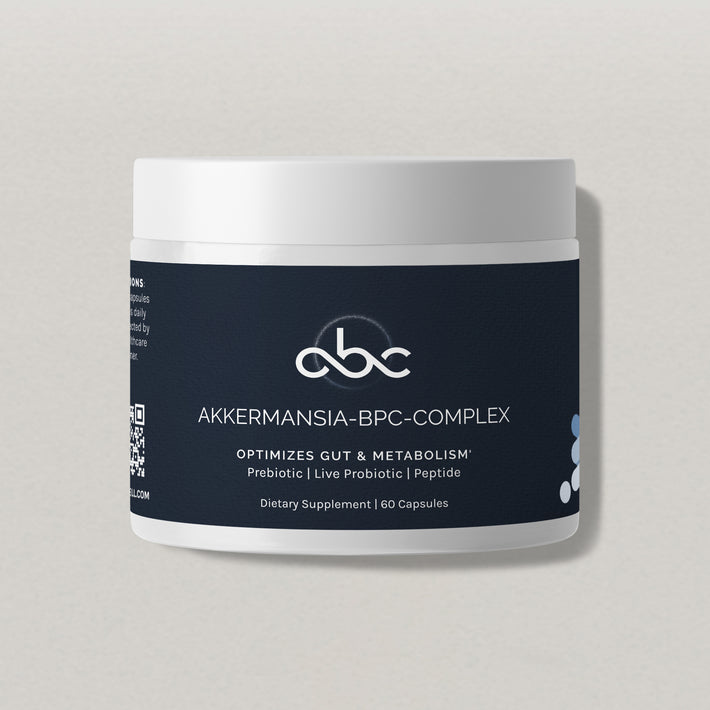
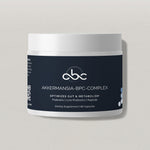
InfiniWell's Akkermansia probiotic contains live Akkermansia muciniphila at 500 million AFU per capsule along with 250 mg of Sunfiber prebiotic. Our Akkermansia longevity guide explores the microbiome research in more detail.
AC-11 for DNA maintenance
AC-11 is a water-based extract of cat's claw (Uncaria tomentosa) studied for its potential effects on cellular responses related to DNA stress. In a small human AC-11 study, 12 healthy adults received 250 or 350 mg daily for eight weeks. Researchers reported changes in measures of the cells' DNA maintenance capacity after a lab-induced challenge.
Because the evidence is limited by the study's small size and age—it was published in 2001—larger and more recent human trials would be needed to establish how consistently these findings apply.
AC-11 is the lead ingredient in InfiniWell's DNA Prime, which also contains L-ergothioneine, broccoli seed concentrate standardized for glucoraphanin, buckwheat extract, and 2-HOBA.
L-ergothioneine has also drawn interest in healthy aging research. In a paper on longevity nutrients, it was proposed that compounds such as ergothioneine may support long-term health even though they aren't considered essential vitamins.
Epicatechin for muscle and vascular function
Epicatechin is a flavanol found naturally in cocoa and other plant foods. Human research has examined its effects on nitric oxide pathways involved in normal vascular function and circulation. One epicatechin study found that cocoa-derived epicatechin influenced nitric oxide-related vascular responses in healthy adults.
Researchers have also investigated epicatechin in relation to muscle function. In a small epicatechin pilot study, participants received 1 mg per kilogram of body weight daily for seven days. Researchers reported higher hand-grip strength along with changes in the follistatin-to-myostatin ratio, which reflects the balance between two proteins involved in regulating muscle growth.
The evidence is mixed, however. In an epicatechin training study, researchers enrolled 29 recreationally active adults, 20 of whom completed four weeks of cycling training while taking either 200 mg of epicatechin daily or a placebo. The epicatechin group did not show greater training adaptations than placebo and showed smaller gains in some aerobic and mitochondrial measures.
InfiniWell's Epicatechin provides 500 mg per two-capsule serving.
How to evaluate a longevity supplement
Longevity supplements can contain very different ingredients, so consider what's in the formula, what the ingredient has been studied for, and how closely the product reflects that research.
A few things to look for:
-
Human research: Check whether the ingredient has been studied in people or whether the evidence comes mainly from laboratory and animal research. Also consider the size and duration of the available studies.
-
Amount per serving: Look for a label that clearly states how much of each active ingredient the product provides rather than hiding amounts in a proprietary blend. You can then compare that information with amounts used in published human research.
-
Form of the ingredient: Different forms aren't always interchangeable. The Akkermansia research above, for example, produced different findings for live and pasteurized preparations.
-
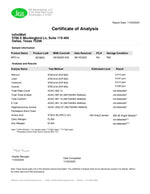
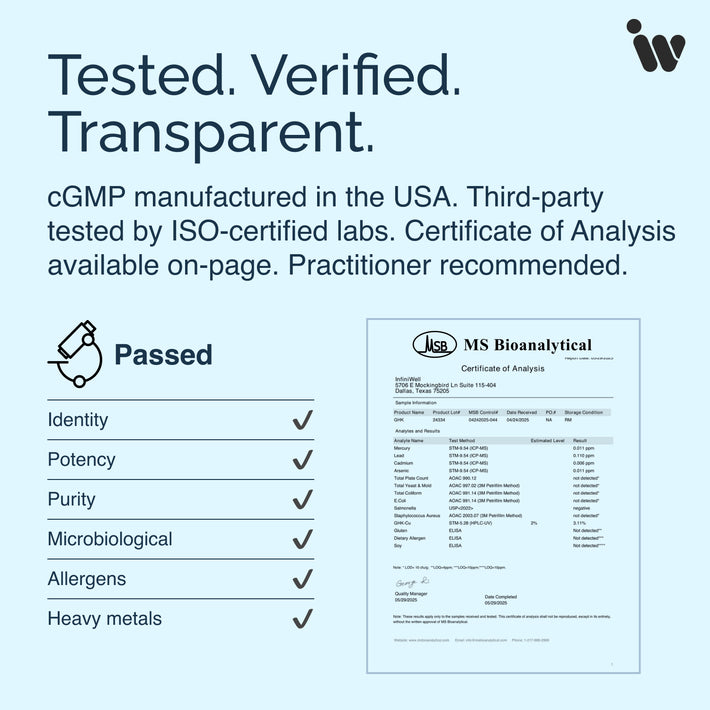
Independent quality testing: A current Certificate of Analysis can provide information about a product's identity, purity, and testing results.
-
Claims that match the evidence: Be cautious when a product promises more than its research supports.
If you're considering one of the ingredients covered in this guide, InfiniWell offers NMN, Senolytic, Akkermansia, DNA Prime, and Epicatechin. You can also explore the full healthy aging collection.
How supplements fit into a healthy aging strategy
Longevity supplements don't replace the fundamentals associated with healthy aging, including quality sleep, regular physical activity, and a balanced diet. Instead, they can complement those habits by providing specific nutrients or compounds being studied for different aspects of healthy aging.
If you're considering a longevity supplement, start with what you want to support and look closely at the evidence behind the ingredient. Keep in mind that changes in biomarkers or measures of physical function don't necessarily translate into long-term health outcomes.
Browse InfiniWell's aging and longevity support collection for formulas designed to support cellular energy, metabolic wellness, gut health, and other processes associated with healthy aging. But as always, talk with your healthcare provider before adding a new supplement, particularly if you take medications or have an existing health condition.
Longevity supplements: FAQs
-
SOURCES
Products mentioned in this article


You May Also Like
View All Articles

Biohacking Gifts for the Wellness Enthusiast in Your Life
Shopping for someone who tracks their sleep, fine-tunes their routines, or follows healthy aging research? This guide offers biohacking gift ideas, from simple sleep tools to wearables and supplements, and helps you choose one that fits their interests.
Biohacking Gifts for the Wellness Enthusiast in Your Life
Shopping for someone who tracks their sleep, fine-tunes their routines, or follows healthy aging research? This guide offers biohacking gift ideas, from simple sleep tools to wearables and supplements, and helps you choose one that fits their interests.