



























































Key takeaways
-
Current human research doesn't show a clear winner between nicotinamide riboside (NR) and nicotinamide mononucleotide (NMN). Both can raise circulating nicotinamide adenine dinucleotide (NAD+) levels, and the limited head-to-head evidence has produced mixed results.
-
NR and NMN are both NAD+ precursors, meaning they can be used by the body to produce NAD+. NAD+ is a coenzyme involved in cellular energy metabolism and other normal cellular processes.
-
NR and NMN are closely related, but NMN has one extra chemical component called a phosphate group. That small structural difference affects how the body handles each molecule on its way to making NAD+.
-
NR has a relatively direct route into cells, while NMN may require additional processing depending on the tissue and pathway involved. Researchers are still studying exactly how NMN gets into cells and whether these differences have practical significance.
-
Human clinical evidence comparing NR and NMN remains limited. One small six-person crossover study reported a greater change in NAD+ with NR, while a 65-person placebo-controlled study found comparable results between the two.
-
Both have been well-tolerated in the human trials conducted so far, but studies have generally been small and relatively short. Research is ongoing and not definitive, and results can vary from person to person.
If NR and NMN both help the body make NAD+, is one a better choice than the other?
That question has become harder to answer as human research has grown. NR and NMN are closely related NAD+ precursors, but they follow somewhat different pathways in the body, and studies comparing them directly haven't shown that one consistently outperforms the other.
One small crossover trial found a greater rise in blood NAD+ with NR over eight days. A larger placebo-controlled trial found the two performed similarly.
If you're comparing NR and NMN for NAD+ support, this guide breaks down those findings, how each precursor is processed, and what we know about safety so far.
What NR and NMN are
Both belong to the vitamin B3 family, and the body can use either one to make NAD+. NAD+ plays an important role in cellular energy production and other normal cellular processes.
NR stands for nicotinamide riboside and is commonly found in supplements as nicotinamide riboside chloride. NMN stands for nicotinamide mononucleotide. Chemically, they're closely related. NMN has an additional phosphate group that NR doesn't, and that small structural difference affects how the two molecules are transported and processed in the body.
What happens after you take NR or NMN
NR has a relatively straightforward route into cells. It can enter through established transport pathways, then the body converts it to NMN and eventually NAD+.
NMN's route is less clear. Research suggests NMN can be converted to NR outside cells before entering. Other research has proposed that NMN may also enter certain cells directly, although that finding remains debated.
Much of what we know about these transport pathways comes from animal and cell research, so it's not yet clear exactly how they work in humans. A more direct route doesn't necessarily make one precursor better than the other.
What human studies tell us about NR vs. NMN
Direct human comparisons of NR and NMN are still limited, but two recent studies give us a starting point.
The eight-day crossover study
A 2026 crossover study involved six healthy adults who took NR and NMN during separate eight-day periods. Because each participant received both compounds, the design helped control for differences between individuals.
Whole-blood NAD+ rose 161% from baseline with NR and 69% with NMN. However, the study was open-label, had no placebo group, and included only six people. The researchers also found no meaningful difference between NR and NMN in the brain measurements they assessed.
The two-week parallel group trial
A larger 2026 study published in Nature Metabolism compared NR, NMN, nicotinamide, and placebo over 14 days. Sixty-five healthy adults were included in the final analysis.
NR and NMN produced comparable changes in whole-blood NAD+. Compared with placebo, the difference was 49.4 µM for NR and 43.1 µM for NMN. The researchers concluded that both produced similar effects on circulating NAD+ over the study period.
Taken together, these studies don't establish a winner. The study favoring NR was very small, while the larger study found NR and NMN comparable. Both were also short and open-label, leaving plenty of room for larger and longer human studies.
Earlier NR research has also reported a 2.7-fold rise in NAD+, but that particular finding came from a pilot experiment involving one participant.
NR and NMN side by side
The biggest differences between NR and NMN come down to their structure, how the body processes them, and what human studies have found so far. Here's how they compare at a glance.
|
NR |
NMN |
|
|
Full name |
Nicotinamide riboside |
Nicotinamide mononucleotide |
|
Structural difference |
Does not contain a phosphate group |
Contains an additional phosphate group |
|
How the body processes it |
Can enter cells through established transport pathways |
May be converted to NR before entering cells; direct transport has also been proposed |
|
Small crossover study (8 days) |
NAD+ rose 161% from baseline (n=6) |
NAD+ rose 69% from baseline (n=6) |
|
Larger study (14 days) |
+49.4 µM vs. placebo |
+43.1 µM vs. placebo |
What we know about NR and NMN safety
Human studies of both NR and NMN have generally reported favorable short-term tolerability, although the evidence is still limited.
For NR, a double-blind, placebo-controlled trial followed 140 adults taking up to 1,000 mg daily for eight weeks. Researchers found no significant differences in adverse events between the NR and placebo groups.
For NMN, a 2026 systematic review and meta-analysis pooled 10 randomized trials involving 383 participants. The authors reported favorable tolerability while cautioning that the available research cannot rule out rare, delayed, or long-term risks. An earlier small study involving 10 healthy men also found single amounts of up to 500 mg were well-tolerated.
So, is NR or NMN better?
Both NR and NMN can raise circulating NAD+, although NR has a longer history of human research. Newer NMN studies are adding to the evidence, while the small direct comparison that favored NR isn't enough on its own to settle the question.
Without a clear advantage for either one, focus on what you can evaluate:
-
Label transparency
-
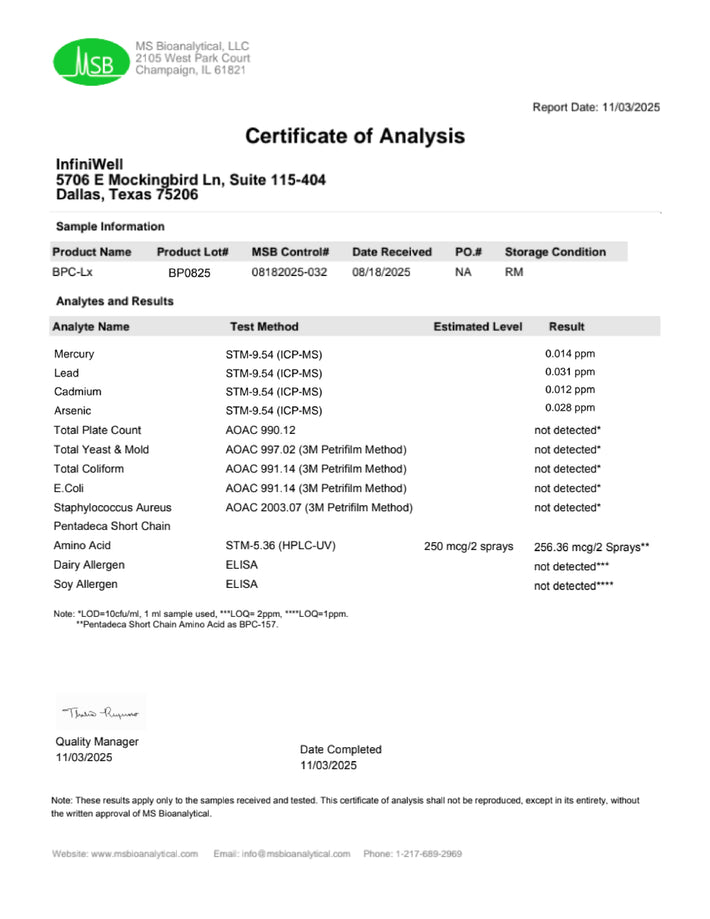
Third-party testing
-
How well the product fits your wellness routine
If you're leaning toward NMN, InfiniWell offers an NMN supplement. Cellular Energy Pro pairs a liposomal NAD+ precursor with Urolithin A, a compound produced by gut bacteria from certain plant compounds. You can also explore additional NAD+ support formulas.
For more background, our guides explain what NMN is and the relationship between NMN and NAD+.
NMN vs. NR: FAQs
-
SOURCES
Products mentioned in this article


You May Also Like
View All Articles

Mitochondrial Health Supplements: A Complete Guide
Can a supplement support the tiny structures that help your cells produce energy? Explore what researchers have found about NMN, urolithin A, CoQ10, and other mitochondrial health ingredients—and where the evidence is still limited.

Perimenopause Supplements: A Guide to Nutrients and Healthy Aging
Perimenopause supplements range from familiar nutrients such as vitamin D and magnesium to herbal ingredients including black cohosh and red clover. This guide reviews the research behind common options and explains how broader healthy-aging ingredients such as NMN and epicatechin fit in.