





































Key takeaways
- The best scalp serum for hair growth depends on what you want it to do. Look at the active ingredients, the type of formula, the research behind it, and whether its claims and expected timeline are realistic.
- Scalp serums generally fall into four groups: peptide, botanical, hydrating, and minoxidil. Minoxidil is an over-the-counter drug, while the other categories generally include cosmetics formulated to support the scalp environment and the appearance of hair.
- Research on peptide-based scalp ingredients is still developing. Zinc thymulin and methyl vanillate have been studied in small human trials, while PTD-DBM has been investigated in preclinical research, with further research needed to understand their potential applications.
- Hair growth takes time. Because follicles move through months-long growth cycles, studies evaluating scalp ingredients may require several months to detect visible changes.
- InfiniWell’s DUO pairs GHK-Cu with zinc thymulin, while PTD-DBM + Methyl Vanillate takes a different approach involving the Wnt/β-catenin pathway. Both are 25 mL, water-based dropper serums applied once daily.
- Start with the ingredient panel. Named actives, a clearly explained formula, and realistic expectations give you a better basis for comparing scalp serums.
Most adults have 80,000-120,000 hairs on their scalp, and at any moment, 85%-90% are in the growth phase, according to an overview of the hair growth cycle. That phase lasts 2-6 years per hair, while the resting phase lasts about three months before the hair sheds and the follicle begins a new cycle. Shedding around 100 hairs a day is normal.
Hair growth happens over months, so expectations for any scalp product need to account for that timeline. Just as important, products marketed as scalp serums for hair growth can contain very different ingredients and work in different ways. Some are drugs, and most are cosmetics.
This guide sorts through the main types, looks at the research behind common ingredients, and explains where InfiniWell’s two scalp serums fit.
Cosmetic vs. drug: What's the difference?
One important distinction between scalp products is whether they're cosmetics or drugs, which is worth keeping in mind when comparing products.
Topical minoxidil is an over-the-counter drug, while many scalp serums are cosmetic products. InfiniWell’s PTD-DBM + Methyl Vanillate, for example, is a cosmetic serum for external use, with results that may vary by individual. Cosmetic serums should be evaluated based on their ingredients, intended cosmetic use, and the research supporting those ingredients.
Comparing the main types of scalp serums
Once you understand the difference between drugs and cosmetics, the next step is to look at what each formula is built around.
| Serum type | Common ingredients | What it’s designed to support | Best for |
|---|---|---|---|
| Peptide-based scalp serums | GHK-Cu, zinc thymulin, PTD-DBM | The scalp and follicle environment | People who want a peptide-based approach |
| Botanical serums | Rosemary, caffeine, plant extracts | Scalp conditioning and hair appearance | People who prefer plant-derived formulas |
| Hydrating scalp serums | Hyaluronic acid, panthenol | Scalp hydration and comfort | People looking for added scalp hydration |
| Minoxidil products | Minoxidil (2% or 5%) | Over-the-counter drug | People specifically seeking a drug option |
Botanical serums
Rosemary has some human research behind it. In a six-month study, both rosemary oil and 2% minoxidil raised hair counts from baseline by month six, with no significant difference between the groups. However, evidence from a single study isn't enough to draw broad conclusions.
Caffeine has been studied too, but much of the research is laboratory-based. While a human follicle study found more growth in cultured follicles, a 2025 evidence review found that clinical evidence for caffeine-containing hair products remains weak because of limitations in study design.
Hydrating serums
Hyaluronic acid and panthenol serums are primarily designed to hydrate and condition the scalp. Their value is in supporting scalp moisture and comfort rather than directly promoting hair growth.
Peptide ingredients to know
Peptide-based scalp serums use a range of active ingredients, and the research behind them varies. Here’s what to know about some of the ingredients you may encounter.
GHK-Cu
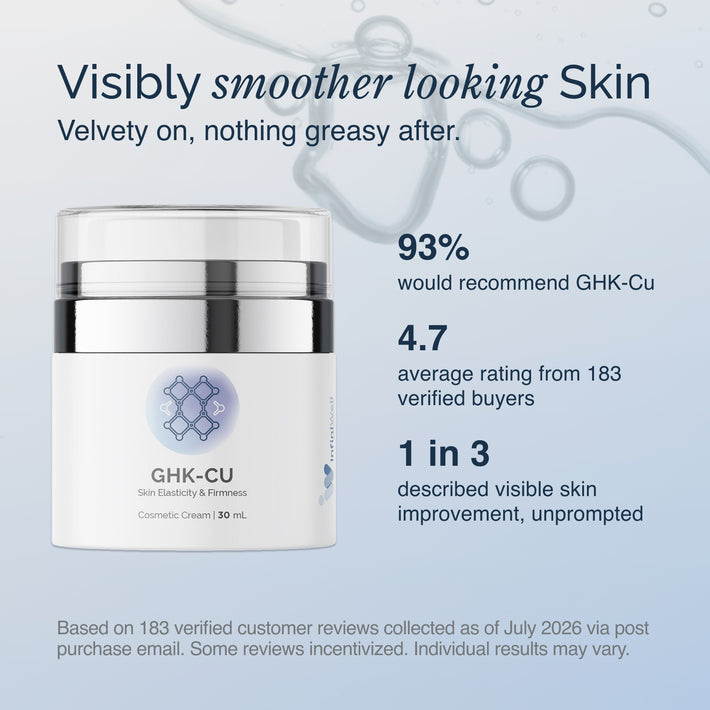
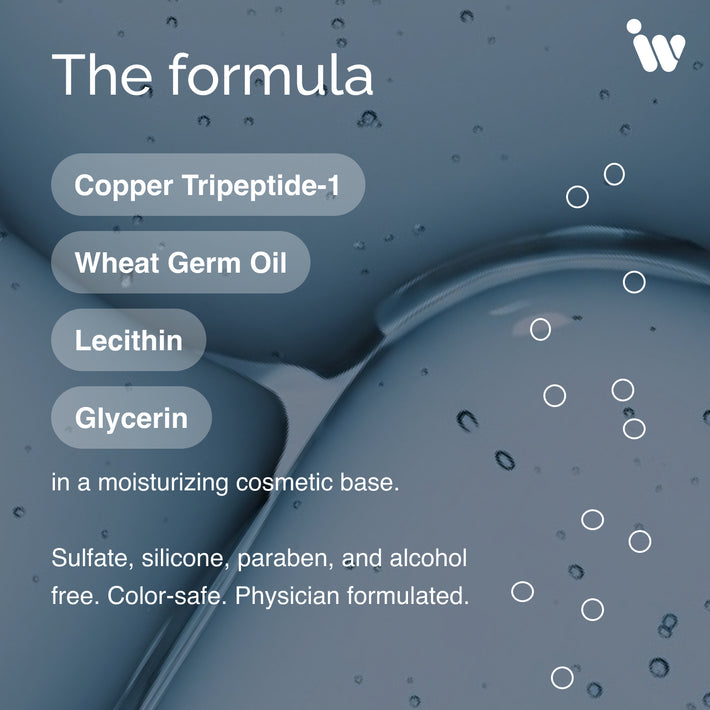
GHK-Cu is a copper-binding tripeptide naturally present in the body. GHK-Cu levels decline with age, from roughly 200 ng/mL in plasma at age 20 to 80 ng/mL by age 60. Much of the research on GHK-Cu has focused on skin, which we cover in our guide to copper peptide skincare.
GHK-Cu has also been studied specifically in relation to hair growth. In a 2023 preclinical study, researchers tested a topical GHK-Cu formulation in mice and measured changes in hair density and hair follicles.
Zinc thymulin
Thymulin is a peptide whose biological activity depends on zinc. In a 2017 pilot study, 18 participants used a topical zinc thymulin spray for 4-10 months. Researchers reported favorable changes in hair growth measures and no scalp irritation, but the study had no placebo group and the evidence remains preliminary.
Our guide to zinc thymulin research takes a closer look at the available evidence.
PTD-DBM and methyl vanillate
PTD-DBM and methyl vanillate have both been studied in connection with Wnt/β-catenin signaling, a pathway involved in hair follicle biology.
In 2017, researchers studying CXXC5 and hair growth found that PTD-DBM affected Wnt/β-catenin signaling and was associated with changes in hair growth in mice. The study also included cultured human dermal papilla cells but did not test PTD-DBM in a human clinical trial.
Methyl vanillate has also been studied in humans. In a six-month pilot study, 20 women used a 0.2% topical formulation. Researchers reported hair counts 6% higher and hair mass index 12% higher than baseline. The study did not include a control group, so further research is needed to confirm the findings.
Our PTD-DBM explainer covers the mechanism and research in more detail.
Which InfiniWell scalp serum should you choose?
InfiniWell’s hair and scalp collection includes two serums with different active ingredients and formulations.
DUO (GHK-Cu + zinc thymulin)
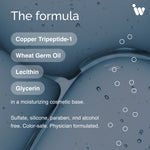
DUO combines the copper peptide GHK-Cu with zinc thymulin in a water-based serum. It’s formulated to support hair strength and resilience and the appearance of fuller, thicker-looking hair. If you’re exploring peptides for scalp wellness, DUO brings two peptide ingredients together in one formula.
PTD-DBM + Methyl Vanillate
PTD-DBM + Methyl Vanillate takes a different approach, pairing PTD-DBM with methyl vanillate, two ingredients studied in connection with the Wnt/β-catenin pathway. This signaling pathway plays a role in hair follicle development and the hair growth cycle.
Which formula fits your preferences?
Both are once-daily, water-based cosmetic serums. Here’s a quick comparison before you choose between them.
| DUO | PTD-DBM + Methyl Vanillate | |
|---|---|---|
| Key ingredients | GHK-Cu + zinc thymulin | PTD-DBM + methyl vanillate |
| Approach | Combines copper and zinc peptides for scalp support | Centers on ingredients studied in connection with Wnt/β-catenin signaling |
| Research base | GHK-Cu: skin and preclinical hair research; zinc thymulin: small human pilot study | PTD-DBM: animal and cell studies; methyl vanillate: small human pilot study |
| Consider if you prefer | A formula combining GHK-Cu and zinc thymulin | A formula built around ingredients associated with Wnt/β-catenin signaling |
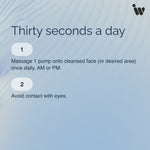
| Format and use | 25 mL, water-based dropper serum; apply evenly to the scalp once daily and avoid the eyes | 25 mL, water-based dropper serum; apply evenly to the scalp once daily and avoid the eyes |
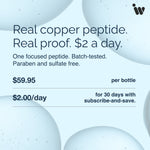
| Price at time of writing | $59.95 one-time; subscription pricing available | $69.95 one-time; subscription pricing available |
Neither finished formula has been directly compared with the other in a published clinical trial, so there isn’t evidence that one works better than the other.
What to check before you buy any scalp serum
Whatever scalp serum for hair growth you choose, a few details can help you evaluate the formula beyond reviews and product rankings.
- Clearly identified active ingredients: Look for specific, named actives and clear information about their role in the formula.
- Clear cosmetic or drug positioning: Check whether the product is a cosmetic or a drug, and make sure its claims reflect that distinction.
- Realistic expectations: Hair changes take time, and study timelines vary by ingredient. Look for claims that reflect the research behind the specific ingredients in the formula.
Results vary from person to person, and research on many cosmetic scalp ingredients is still developing. If you’re interested in peptide-based options, explore InfiniWell’s hair and scalp collection to compare the formulas and ingredients available.
Scalp serum for hair growth: FAQs
-
SOURCES
Products mentioned in this article

You May Also Like
View All Articles

Sun-Damaged Skin: Signs, Root Causes, and Smart Skincare Upgrades
Daily environmental stressors can take a toll on your skin. Discover how GHK-Cu supports healthy skin and overall skin wellness.

Should I Use Glycine for Sleep: Benefits, Amounts, and Best Sources
Can glycine support a better nighttime routine? Explore what early research says about glycine and sleep, the serving amounts studied, food sources, and what to consider before adding a supplement.