








Key takeaways
-
Peptides aren't one legal category. Their status depends on what the product is and how it's made, labeled, and sold.
-
FDA-approved peptide medications, such as insulin, went through clinical trials before approval.
-
Compounded peptide medications and "research use only" peptides aren't FDA-approved.
-
Peptide supplements are sold without a prescription, can't make drug claims, and aren't reviewed by the FDA before sale.
-
A lot-specific Certificate of Analysis (CoA) is the most practical way to check what's in a supplement.
Are peptides legal? Many are, but "peptide" covers several very different products, so the answer depends on which kind you mean. A prescription medicine, a pharmacy-made medication, a powder labeled for lab research, and oral BPC supplements all fall under different rules, even when the ingredient names sound alike.
The question is everywhere right now, thanks to a busy year of federal peptide news. This article is for adults comparing peptide products: what each legal category means, what changed in 2026, and what to look for on a supplement label.
Are peptides legal? It depends on the category
Peptides are short chains of amino acids, the same building blocks that make up proteins. Your body makes many peptides on its own, and some, like collagen peptides derived from food proteins, are familiar ingredients in foods and supplements. The main difference between a peptide and a protein is size. Peptides are simply shorter chains of amino acids.
In the US, the Food and Drug Administration (FDA) regulates peptides under the Federal Food, Drug, and Cosmetic Act. A peptide's legal status depends on how it's made, labeled, and sold, and a "For Research Use Only" label doesn't exempt a product from FDA drug rules.
So, the answer to "are peptides legal in the US?" starts with a question of its own: which kind of peptide?
Rules also differ outside the US. Health Canada, for example, separates authorized peptide drugs from unauthorized peptide products, so this article sticks to US rules.
The four ways peptides are sold in the US
Most peptide products fall into one of four categories, and each has its own oversight and its own path to the shelf.
|
Category |
Who oversees it |
Reviewed by the FDA before sale? |
How it's sold |
|
FDA-approved peptide medications |
FDA |
Yes |
With a prescription |
|
Compounded peptide medications |
State pharmacy boards, under federal rules |
No |
With a prescription, prepared for one person |
|
Research use only peptides |
FDA drug rules still apply |
No |
Labeled for lab research only |
|
Peptide dietary supplements |
FDA, under supplement rules |
No |
Over the counter |
FDA-approved peptide medications
These are the most tightly regulated peptides. Insulin and glucagon-like peptide-1 (GLP-1) medicines, often called GLP-1s, are well-known examples, and both were approved after safety studies showing safety and efficacy in humans.
FDA-approved medications go through clinical trials before they reach a pharmacy, and they're available only with a prescription.
Compounded peptide medications
Compounding is when a licensed pharmacy prepares a medication tailored to one person, based on a prescription. Compounded drugs aren't FDA-approved, and the agency doesn't verify their safety, efficacy, or quality before they're marketed.
Compounding pharmacies can only work with certain bulk drug substances, and the FDA keeps lists of which ones qualify. One list covers substances that may present significant safety risks.
A spot on that list reflects safety concerns the agency raised during its review, and while a substance is on it, the FDA doesn’t treat it as eligible for compounding. Several popular peptides sat on that list from 2023 until April 2026, a shift we covered in our guide to 2026 peptide restrictions.
Research use only and gray market peptides
Some peptides are sold online as chemicals labeled "for research use only" or "not for human use." They're made for lab work, so their quality isn't checked against human-use standards, and many move through the gray market.
Gray market products may be contaminated or mislabeled, and independent testing reports have found quality problems in some unregulated peptides. With no oversight for people, the risk of getting something other than what the label says is higher, which is why third-party testing is worth looking for, whatever you buy.
Peptide dietary supplements
Peptide supplements fall under the Dietary Supplement Health and Education Act (DSHEA) of 1994. The FDA doesn't approve supplements before they're sold. Instead, companies are responsible for evaluating safety and labeling before marketing, and supplements can't claim to treat, cure, or prevent any disease.
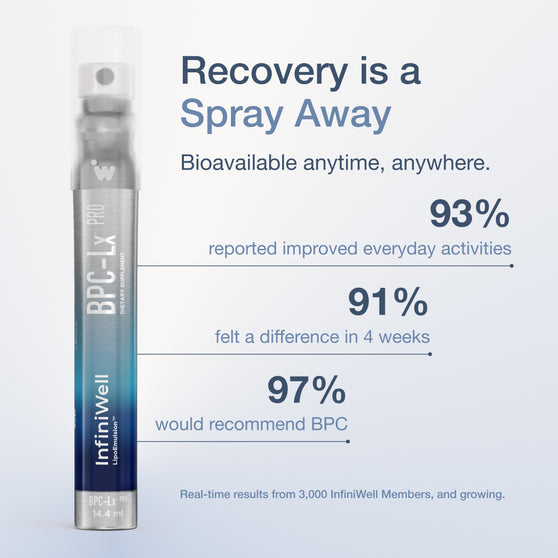
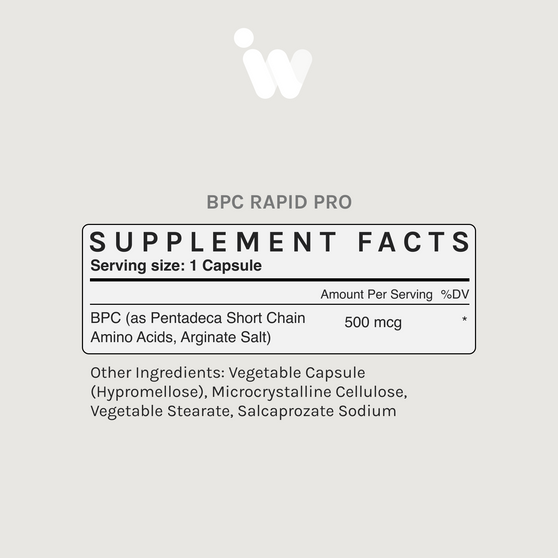
That's the category InfiniWell's oral BPC line belongs to. InfiniWell BPC Rapid Pro, for example, delivers 500 mcg of BPC, as pentadeca short-chain amino acids, in each one-capsule serving, and it's sold as a dietary supplement.
What changed for peptides in 2026
Peptide regulation moved quickly this year. In July, the FDA's Pharmacy Compounding Advisory Committee reviewed seven peptides, which we covered in our look at the July 2026 advisory vote.
Then, on October 28, 2026, the Department of Health and Human Services (HHS) announced an interim enforcement discretion policy covering certain bulk drug substances, specifically six named peptides: BPC, epitalon, KPV, MOTS-c, Semax, and TB-500. Under it, HHS doesn't plan to take action against state-licensed pharmacies, federal facilities, or licensed physicians that compound these six under set conditions while the FDA finishes its review.
The policy is interim, it was published as a draft open for public comment, and it isn't FDA approval. None of the six has been approved by the FDA as a drug.
Where BPC fits
BPC is a short peptide studied mainly in early lab and animal research, and it hasn’t been approved by the FDA as a drug. It’s also one of the six peptides named in the 2026 interim policy, which covers how licensed pharmacies, federal facilities, and physicians may compound it while the FDA’s review continues.
InfiniWell’s oral BPC products are made and labeled as dietary supplements. Like every supplement, they’re not intended to diagnose, treat, cure, or prevent any disease, and research on BPC in humans is still at an early stage.
How to check a peptide supplement before you buy
Because supplements aren't reviewed before sale, a few quick checks tell you a lot about the product in your cart:
-
Supplement Facts panel: The label lists each ingredient, the amount per serving, and the serving size, and the product is sold as a supplement rather than a research chemical.
-
Certificate of Analysis: A lot-specific Certificate of Analysis from an independent lab shows identity, purity, and contaminant testing for the batch you're buying.
-
Manufacturing standards: Look for products made in a facility that follows Good Manufacturing Practices (GMP). A good brand's website should say so plainly.
-
Full ingredient list: Many supplements use a combination of ingredients, so every one should appear on the label, along with any allergens you need to be aware of.
-
Label claims: A supplement that promises to treat or cure a condition is making a drug claim, which supplements aren't allowed to do.
-
Professional input: Talk to a qualified healthcare professional before adding any new supplement to your routine.
What the research shows so far
Approved peptide medications have years of clinical trials behind them. Many peptides sold for wellness have limited data by comparison, and many haven't been thoroughly reviewed by regulators. Much of what researchers know comes from animal studies, often in mice, rather than large studies in humans.
Early research suggests some peptides are worth further study, but findings in animals aren't proven outcomes in people. How many peptides behave in the human body over the long term is still unknown, and long-term safety data is thin for most of them.
Scientists are still building that literature, and results vary from person to person, so honest labeling and independent testing are essential for anyone choosing a peptide supplement.
The bottom line on peptide legality
Legal peptides come in several forms, including approved medicines, compounded medications, and dietary supplements, and each follows its own rules. "Research use only" products sit outside all three, since they aren't meant for people at all. Knowing which category a product belongs to tells you what oversight it's had and what questions to ask.
If you're comparing peptide supplements, start with the label and the CoA. You can browse our BPC supplement collection to see how InfiniWell's formulas are made and tested.
Are peptides legal: FAQs
-
SOURCES
Products mentioned in this article

You May Also Like
View All Articles

What to Look for When Buying BPC: Capsules, Suggested Use, and Brand T...
Not sure how to compare BPC capsules? Start with the serving information, ingredients, and a lab report that matches the bottle’s lot number. We’ll walk you through each check.

Best Akkermansia Supplement: What to Check Before Choosing
Choosing an Akkermansia supplement starts with the label: the organism, whether it's live or pasteurized, how the count is measured, and what else is in the formula. Here's how to check each one, from count units to storage, testing documentation, and price per serving.