

























































Key takeaways
-
When buying BPC capsules, look for clear label details, a batch-specific third-party Certificate of Analysis (CoA), accessible customer support, and product claims that acknowledge the limited human research without promising results.
-
Published research on BPC is still developing. Most findings come from animal and laboratory studies, while human research remains limited.
-
InfiniWell’s BPC Precision Aminos are offered as dietary supplements, and the FDA does not approve dietary supplements before they're marketed.
-
Separately, BPC has not been approved as a drug for human use and is prohibited under WADA’s S0 Non-Approved Substances category. Athletes subject to anti-doping rules should know that using a product containing BPC could lead to a rule violation.
-
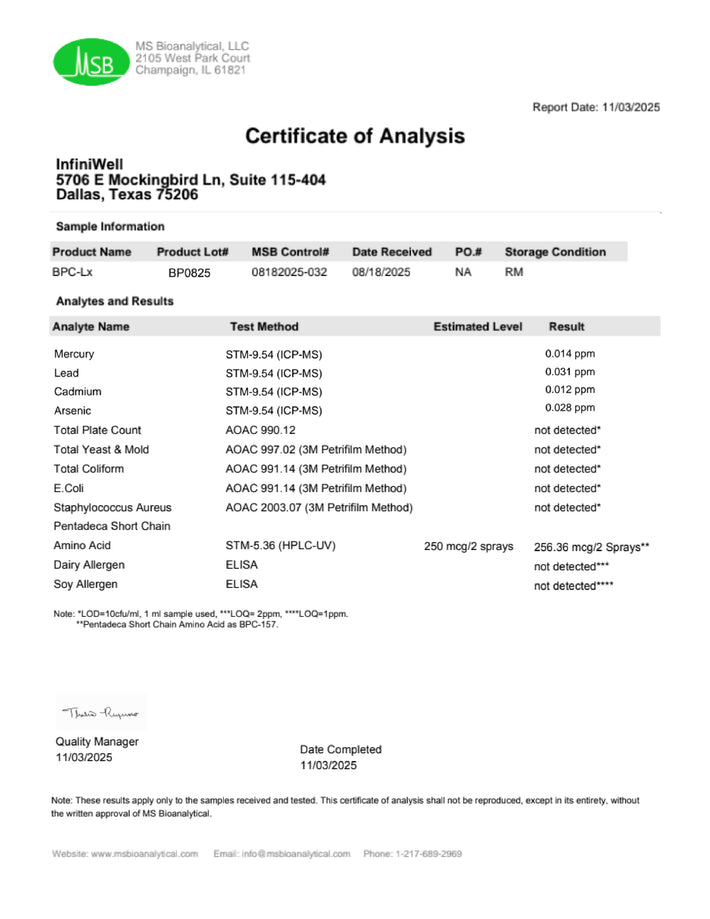
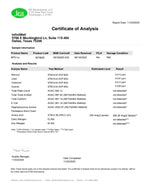
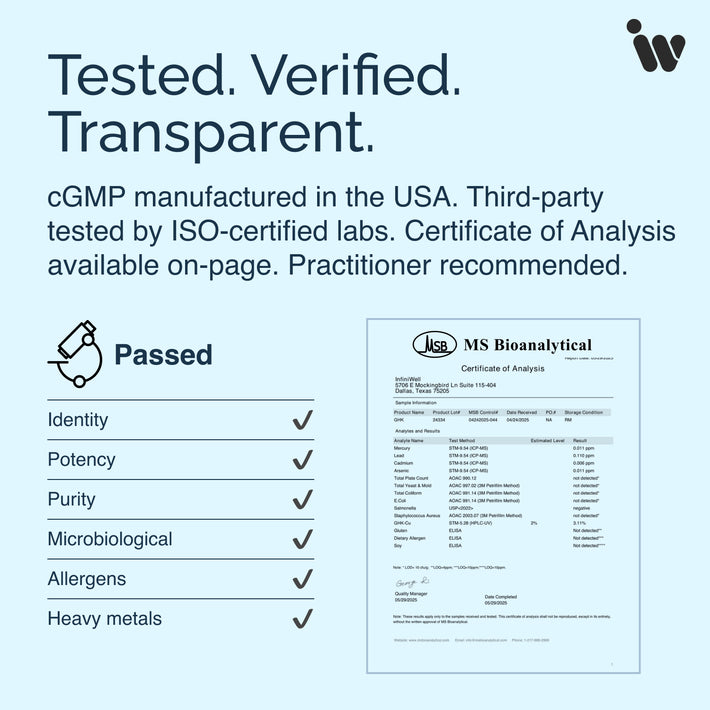
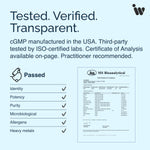
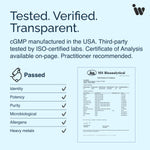
Check that the CoA matches the lot number on the bottle and includes identity, purity, heavy metal, and microbial testing.
-
Human research has not established a standard serving size. Follow the suggested use on the product label and speak with a qualified healthcare professional before use.
If you're wondering what to look for when buying BPC, start with three things:
-
Third-party lab results you can review
-
A label that clearly states the form, serving size, and suggested use
-
A brand that explains the limits of current research without promising results
This guide covers the differences between research-use products and dietary supplement capsules, what published research can tell us, how BPC is regulated in medicine and sport, and how to review a CoA, product label, suggested use, and brand credentials.
Throughout this guide, BPC refers to the term used in research and for products sold under that name. BPC refers to InfiniWell's dietary supplements and specific product names.
What is BPC, and why does the form change how you shop?
BPC is a synthetic peptide composed of 15 amino acids and modeled on a sequence found in human gastric juice. Because stomach acid can break down some peptides, researchers have been interested in whether BPC remains stable in that environment. A 2011 review described it as stable in gastric juice, which has contributed to research interest in oral formulations.
Products bearing the BPC name generally appear in two broad categories:
-
Research-use powders: Commonly sold as lyophilized powder in sealed vials and labeled for laboratory research, not personal use. Avoid vendors that suggest using a research-only product personally. Products sold for injection may also raise contamination and sterility concerns, particularly when their quality and handling cannot be verified.
-
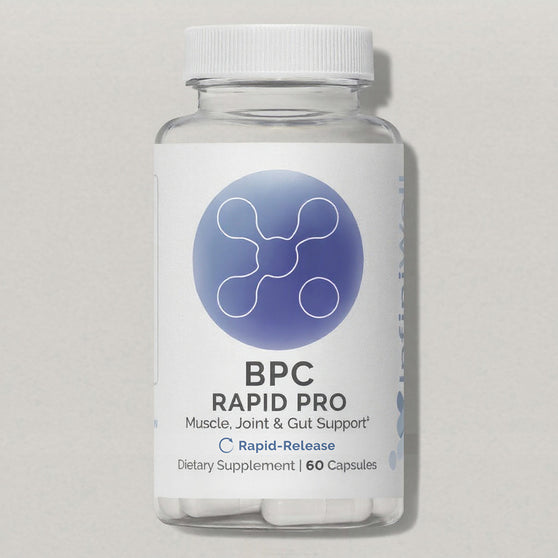
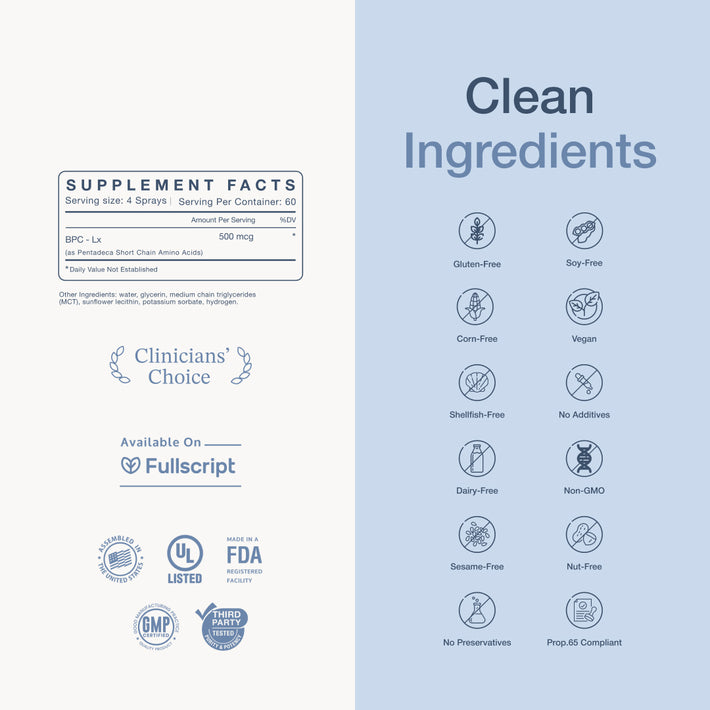
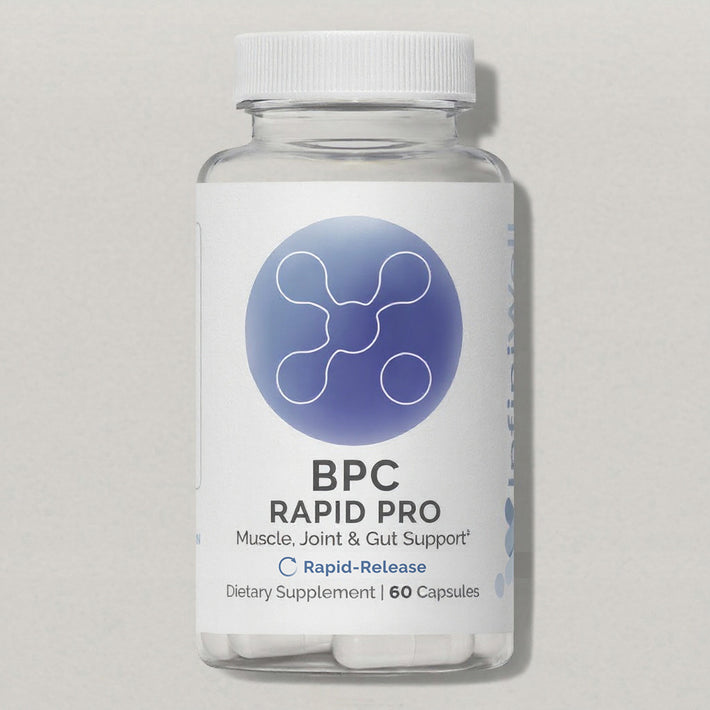
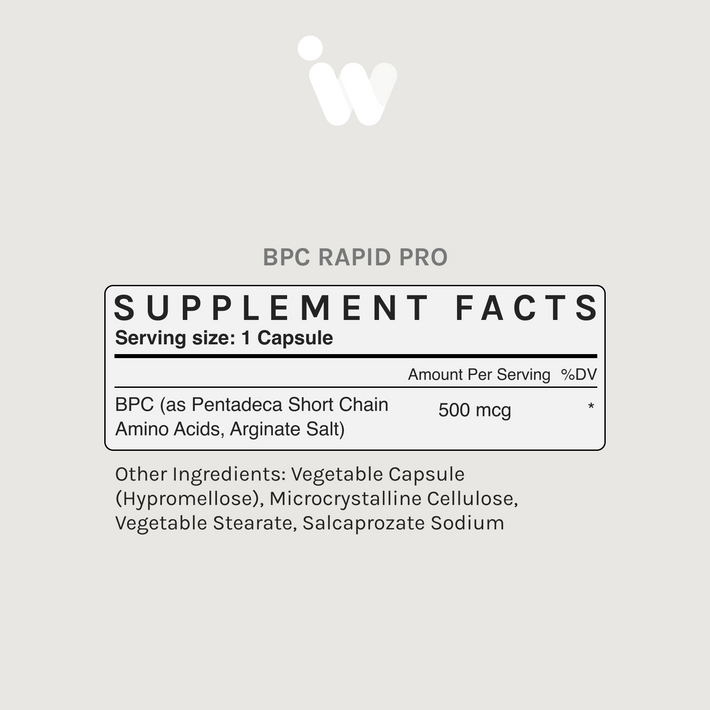
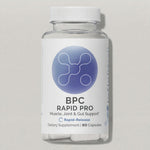
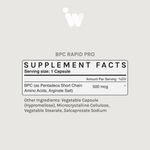
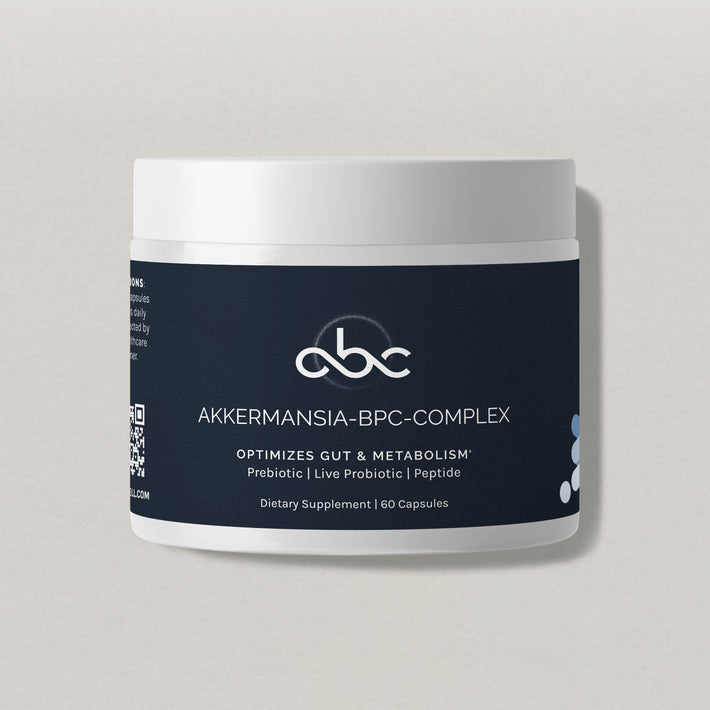
Dietary supplement products: Usually capsules with a Supplement Facts panel, serving size, and suggested use. Our BPC Precision Aminos fall within this category. When comparing capsule products, review the form, amount per serving, other ingredients, suggested use, and batch-specific CoA.
Confirm which category you're looking at before comparing prices. Research-use products and dietary supplements have different labels, intended uses, and quality checks.
What does the published research say so far?
Published research on BPC is growing, but human evidence remains limited. A 2025 systematic review in orthopaedic sports medicine screened 544 papers and included 36 studies. Thirty-five were preclinical studies using animal or laboratory models. The only human study involved 12 participants, and the authors noted that more clinical research is needed to assess safety in people.
Preclinical studies have examined connective tissue, vascular activity, and cellular signaling pathways. A 2017 study using rat and cell models reported changes in VEGFR2 signaling associated with blood vessel formation.
These findings help researchers identify possible mechanisms to study, but they don’t show that BPC produces the same effects in people. Large-scale human trials have not established its safety or potential benefits.
Is BPC an approved medicine?
No. The FDA does not approve dietary supplements before they’re marketed, and BPC has not been approved by the FDA as a drug for human use.
In a July 2026 advisory committee vote, the committee recommended adding BPC to a list that, if finalized, could allow licensed pharmacies to prepare it for individual use under specific conditions. The recommendation is nonbinding, did not approve BPC as a drug, and did not change its regulatory status.
Under the World Anti-Doping Agency’s rules, BPC falls within the S0 category covering non-approved substances. Athletes subject to anti-doping rules should know that using a product containing BPC could lead to a rule violation.
Individual circumstances can affect whether a BPC supplement is appropriate. Anyone considering one should speak with a qualified healthcare professional first, especially if they take medication, are pregnant or nursing, or have questions based on their health history.
What to look for when buying BPC
Product quality and transparency can vary among BPC sellers. Use these five checks when comparing capsules online or in person:
-
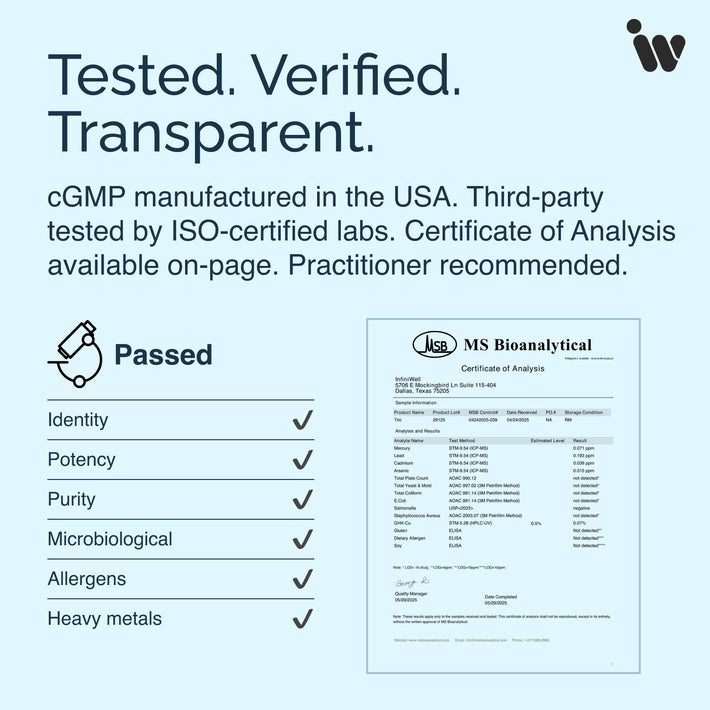
A batch-specific third-party CoA: A Certificate of Analysis is a laboratory report tied to a particular batch. Look for testing from an independent laboratory and confirm which lot the report covers. Our guide to CoA testing explains how to review a report line by line.
-
Identity and purity testing: High-performance liquid chromatography (HPLC) separates components in a sample and can assess relative purity within the test method. Mass spectrometry provides information that supports confirmation of the compound’s molecular identity.
-
Additional contaminant testing: A purity percentage covers only one aspect of product quality. Check whether the available results also include heavy metal and microbial testing.
-
A matching lot number: Compare the lot number on the CoA with the one printed on the bottle. If they do not match, ask the brand for the report covering your specific batch.
-
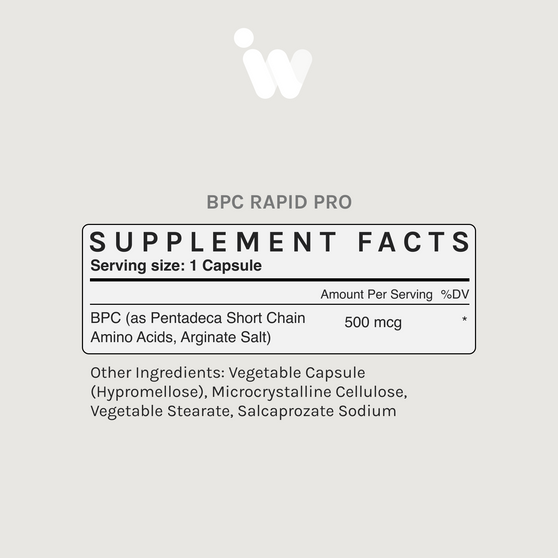
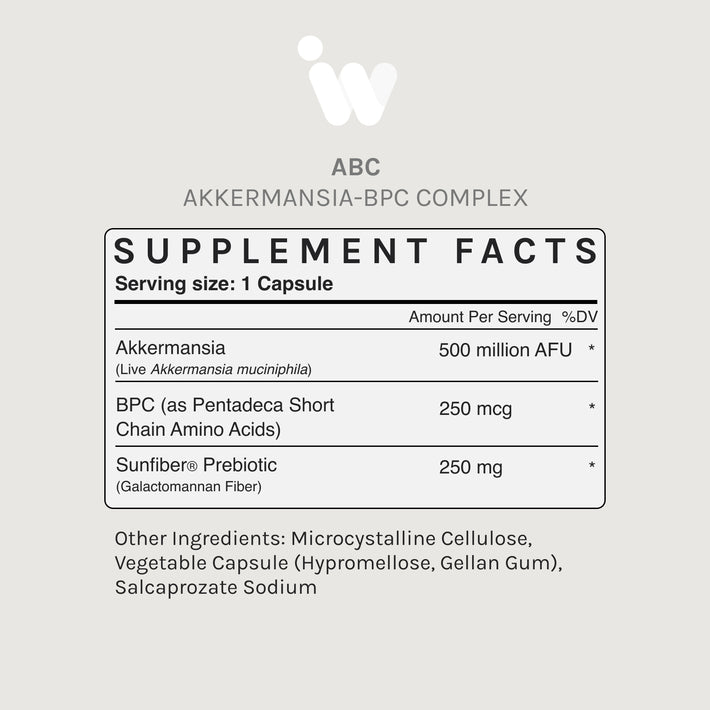
Clear label information: The label should state the amount per serving, number of capsules per serving, suggested use, and all other ingredients. If the formula combines BPC with another dietary ingredient, check that the amount of each ingredient is listed separately.
Be wary of brands that promise guaranteed or unusually fast results, make medicine-like claims, do not provide batch-specific testing, leave key label details unclear, or promote research-use products for personal use.
What is the standard BPC serving size?
Human research has not established a standard serving size. Capsule labels generally list the amount in micrograms per serving, so check how many capsules make up one serving and follow the suggested use provided for that specific product.
For reference, our BPC Original provides 250 mcg per capsule. Speak with a qualified healthcare professional before use, especially if you take medication, are pregnant or nursing, or have questions based on your health history.
How to evaluate BPC brand trust
Start with documentation and business details you can verify: accessible batch-specific CoAs, a valid business address, responsive customer support, clear explanations of the limits of current research, and an appropriate supplement disclaimer.
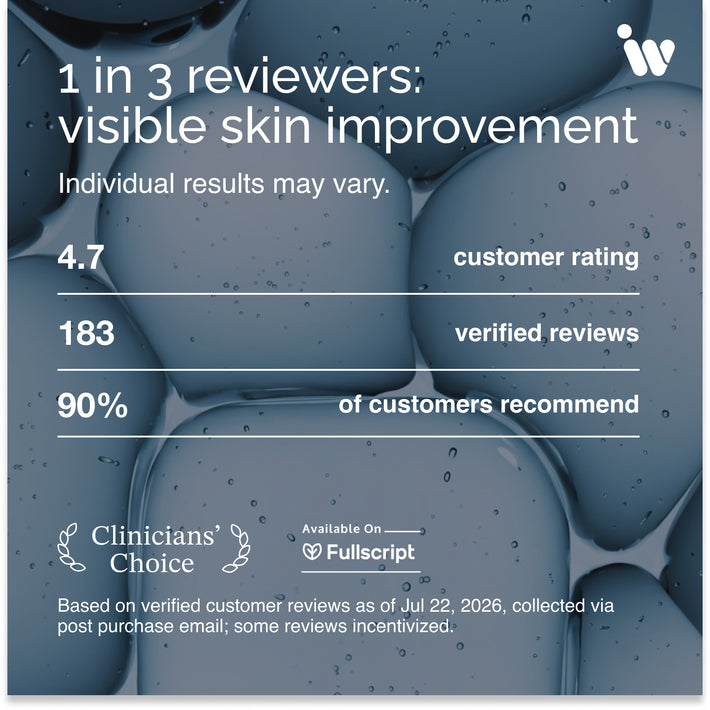
Independent ratings provide another point of reference. We currently hold a 9.01 Brand TrustScore verified by SuppCo, and the score appears on our product pages. You can evaluate us using the same trust checklist you would apply to another brand, then shop BPC capsules when you’re ready.
What to read next:
-
What Is Pentadeca Arginate? Understanding Short-Chain Amino Acid Supplements
-
Forever Young? The Overlooked Side of Peptides for Longevity
What to look for when buying BPC: FAQs
-
SOURCES
Products mentioned in this article


You May Also Like
View All Articles

Can Peptides Help Joint Comfort? A Comprehensive Guide
Peptides for joint health are getting more attention as research grows. Learn how collagen peptides, BPC-157, and key nutrients may support comfort and mobility.

Is InfiniWell Legit? What to Know Before You Buy
InfiniWell combines third-party testing, GMP manufacturing, accessible Certificates of Analysis, and customer feedback to help shoppers evaluate the brand. This guide looks at these quality standards, independent reviews, and other factors to consider before buying an InfiniWell supplement.