







































































Key takeaways
-
Published human trials of up to four months in healthy adults reported mostly mild, infrequent side effects and no serious adverse events attributed to urolithin A.
-
Safety findings apply only to the preparation, amount, and group studied, not to every product or person.
-
A combination formula like Cellular Energy Pro needs a review of every ingredient, not urolithin A alone.
-
Long-term safety data is still limited, and there is little data for some groups.
-
Only about 40% of people make urolithin A from food, which is why some turn to a dietary supplement.
Urolithin A side effects are the first thing many people check before trying it. The short answer from published research is reassuring but narrow: in human trials of up to four months in healthy adults, most reported side effects were mild and infrequent, and no serious adverse events were attributed to urolithin A. Long-term safety data is still limited.
This guide is written for healthy adults weighing a urolithin A supplement who want the evidence, not a sales pitch. If the product you are reviewing is Cellular Energy Pro, a liposomal NMN and urolithin A formula for 2-in-1 cellular energy support, check its own label and warnings rather than another product's trial results. Safety depends on the complete formula, not the ingredient name.
What urolithin A is: Ellagic acid, gut bacteria, and the gut microbiome
Urolithin A is a natural compound that your gut bacteria produce from ellagic acid, a plant substance found in foods like pomegranates, berries, and walnuts. Pomegranates are a primary source of ellagic acid, and the ellagitannins in nuts also contribute to urolithin A production.
Here is the catch: only about 40% of people host the right gut bacteria to make much urolithin A from food. How much you produce depends on dietary factors and your own human gut microbiota. That estimate is one reason the metabolite produced in the gut is also sold directly as a dietary supplement, so people who convert little from food can still get a predictable amount.
Food origin is not a safety guarantee for a concentrated supplement. A pomegranate, an extract, and a defined ingredient preparation are different exposures. The useful question is what the research on the actual preparation shows, which is where human trials come in.
What human trials report about urolithin A side effects
Across the published human studies, including every clinical trial so far, urolithin A showed no significant side effects, participants tolerated it well, and no toxicity was reported. When side effects did come up, mild digestive upset was the most commonly reported, and it was infrequent.
The safety readouts held up on standard measures too. Blood markers of liver function and kidney function stayed within normal ranges during the trials, and urolithin A supplementation did not significantly change gut microbiome balance, with broader gut microbiota composition staying stable. These are encouraging signals for the older adults and other groups studied, though a different gut microbiome could convert ellagic acid differently.
Two limits are worth keeping in view. The trials were short, up to about four months, and they enrolled healthy adults, so they cannot answer every question about longer use or other groups. Consumer summaries like Healthline's describe urolithin A as generally well tolerated, but "well tolerated" always belongs to the people, preparation, and period studied.
A look at the human studies
Three published human studies anchor what we know today: a first-in-human safety study in Nature Metabolism, a 2022 randomized trial in JAMA Network Open, and a trial in middle-aged adults in Cell Reports Medicine. Here is how they compare.
Study |
Who took part and how long |
Amounts studied |
What it reported on safety |
Nature Metabolism (2019), first-in-human |
Healthy older adults, about four weeks |
500 mg and 1,000 mg a day |
A favorable safety profile, with urolithin A measurable in the blood and changes in markers of mitochondrial and cellular health |
JAMA Network Open (2022) |
Adults aged 65 to 90, four months |
1,000 mg a day |
16 adverse events in the urolithin A group versus 15 on placebo, no significant difference, and no serious adverse events |
Cell Reports Medicine (2022) |
Middle-aged adults, four months |
500 mg and 1,000 mg a day |
No serious adverse events reported, alongside changes in some muscle measures described as early research |
All three were small human trials, two of them randomized trials against placebo. An adverse event is anything recorded during a study, not something the ingredient necessarily caused, which is why a placebo group is so useful.
In the four-month JAMA Network Open trial, for instance, the main six-minute walk test did not differ from placebo. The amounts above, 500 mg and 1,000 mg a day, are amounts studied in research, not InfiniWell directions, so do not read them as a serving size.
It also helps to separate mechanism from outcome. Researchers study urolithin A for its role in mitophagy, the process cells use to clear out and recycle worn-out mitochondria.
The first-in-human study reported changes in biomarkers of mitochondrial health and in markers tied to mitochondrial function. That is early research into mitochondrial health and cellular health, not a proven personal benefit. Some longevity findings often quoted online come from animal studies only.
What else researchers study: Mitochondrial function and cellular health
Beyond safety, urolithin A is studied for its effect on mitochondrial function through mitophagy, the housekeeping process that clears out dysfunctional mitochondria. Research suggests this is why the natural compound urolithin draws interest for mitochondrial and cellular health. Interest is not the same as a proven result.
The muscle work shows why careful reading pays off. In these trials, scientists measured muscle strength, muscle function, muscle health, and physical function. They took muscle biopsies from skeletal muscle fibers, along with plasma samples of human plasma, to study skeletal muscle mitochondrial energetics and mitochondrial biomarkers.
A randomized clinical trial (JAMA Network Open) and an earlier placebo controlled study (Nature Metabolism) reported changes in some of these measures in older adults, but the headline walking test did not beat placebo. This belongs to the conversation about how muscle function changes with age, not a performance claim.
Put in context, the clinical trial evidence in older adults points to changes in mitochondrial function, measured through muscle strength and muscle function in people who often make little urolithin A from ellagic acid. A healthy gut microbiome, a younger body, or a different amount could respond differently. None of this proves a benefit.
Other areas, such as immune function, the immune system, brain health, metabolic health, and gut barrier integrity, appear in early research too. Treat them as questions scientists are exploring, not benefits of urolithin A or any product. In animal studies, urolithin A has been reported to prolong lifespan (Nature Medicine), but those are animal findings, and human health outcomes are a separate question short human trials cannot answer.
Who should talk to a professional first
The trials studied healthy adults, so some groups simply do not have safety data behind them yet. That is a gap in the research, not proof of harm, and it is a good reason to get individual guidance.
Seek advice before using urolithin A if any of the following apply:
-
You are pregnant or breastfeeding: There is not enough safety data for these circumstances, so a study in other adults does not establish suitability.
-
The product is for a child or teen: There is little established safety data for children and adolescents, and adult wellness research does not transfer to them.
-
You have a health condition, take medications, or use other supplements: Talk with a qualified healthcare professional before adding a formula, and bring the actual label so the discussion covers the complete product.
This is not a universal list of who can or cannot use urolithin A. It is a reminder that research eligibility and personal circumstances can differ, and an individual review can weigh details a general article cannot.
Why the full formula counts
Many products combine urolithin A with other active ingredients, so each ingredient and any possible interaction is worth reviewing. A finding about urolithin A on its own does not tell you how a multi-ingredient formula will suit you.
Cellular Energy Pro is a good example, since it pairs liposomal NMN with urolithin A. NMN belongs to the NAD+ precursor discussion, and a result about blood NAD+ is not a substitute for evaluating the whole formula for mitochondrial health. If you are comparing labels, our guide on choosing an NMN supplement and our overview of mitochondrial health supplements can help.
Check anything else you already take for overlapping ingredients, too. More products with similar positioning do not add up to a better routine, and overlap is easy to miss when two labels use different names for the same active.
What quality testing can and cannot tell you
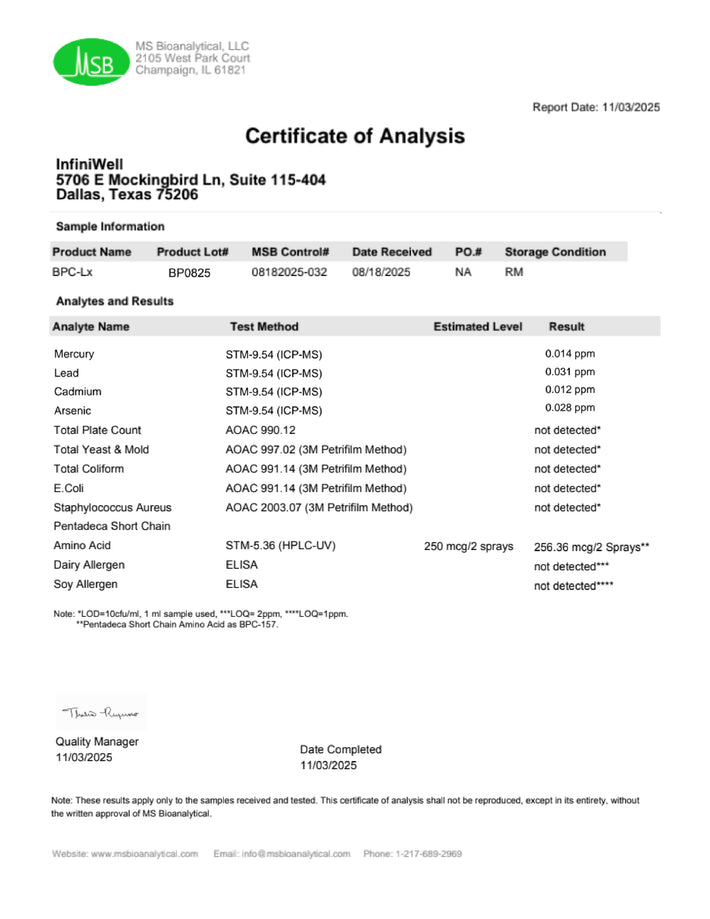
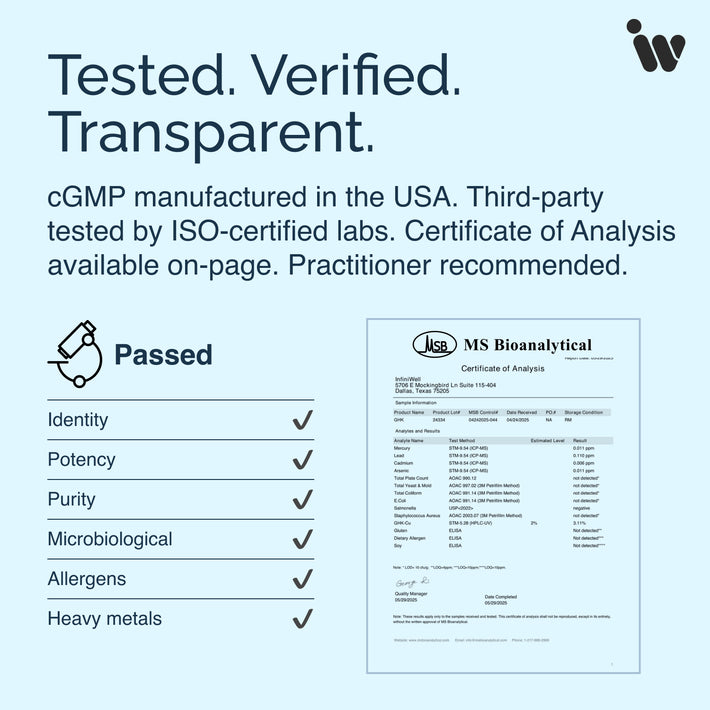
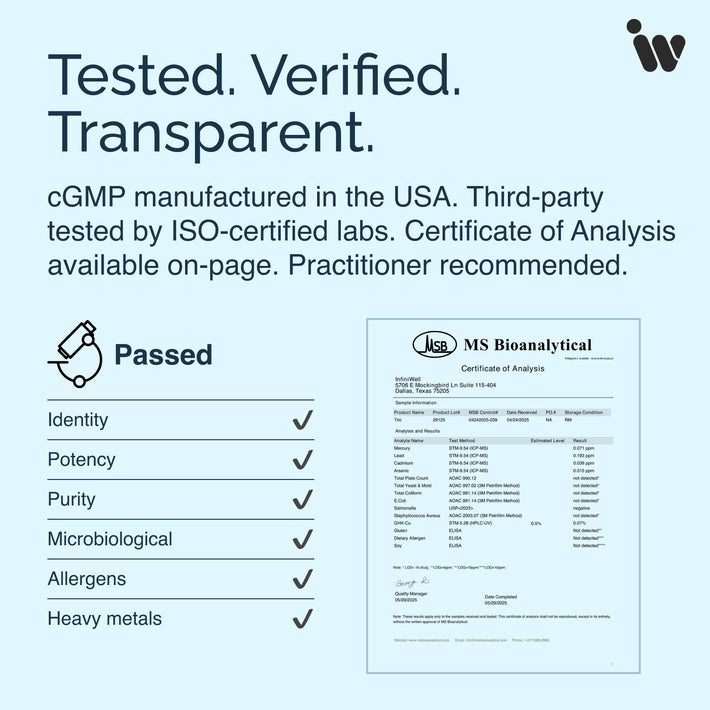
A Certificate of Analysis (CoA) documents the attributes tested in a sample, such as identity, quantity, or particular contaminants. It is useful, but it answers a different question from a human safety study, and it cannot guarantee that a formula suits every person.
When you review one, check whether the report covers the finished product or a raw ingredient, whether it identifies a relevant batch, and which tests were run. Our guide on how to read a CoA walks through these distinctions.
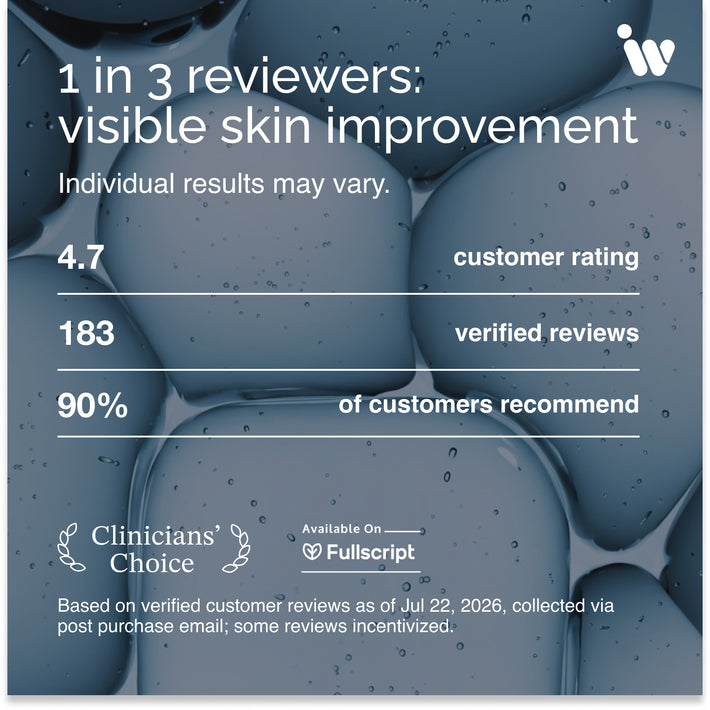
Customer reviews sit in the same category. They are individual experiences, not a controlled safety comparison, so weigh them as anecdotes rather than evidence about dietary supplements in general.
Questions to ask before starting urolithin A
A product name alone is not enough for a useful decision. Bring the full ingredient panel and current directions, then work through a short list.
-
Is the complete formula appropriate for me: Consider every active and other ingredient, not only urolithin A.
-
Does it overlap with anything I already use: Two formulas can share an active without saying so plainly.
-
What evidence applies to this preparation: Research on one ingredient source does not automatically transfer to another.
-
What is still uncertain: Long-term use and combinations remain open questions.
-
How will I review any change: Decide in advance how you will handle an unexpected change, and raise it with a qualified healthcare professional.
Review the label, then decide
Urolithin A has a reassuring short-term safety record in healthy adults, but the decision that counts is always about the full product in front of you. Weigh the research limits, the amounts studied, and your own circumstances before you start.
If you want to keep exploring, browse InfiniWell's healthy aging supplements and review any label and its warnings with a qualified healthcare professional. Keep safety, research limits, and personal suitability as separate parts of the decision.
Urolithin A side effects: FAQs
-
SOURCES
Products mentioned in this article

You May Also Like
View All Articles

Peptides for Hair Growth: A Guide to Cosmetic Scalp Care
Peptides for hair growth get discussed as if they all do the same thing, but the ingredients and the evidence differ. This guide compares GHK-Cu, zinc thymulin, and PTD-DBM as cosmetic scalp care, and explains what the research can and cannot show.

CoQ10: Benefits and Its Role in Cellular Energy
Coenzyme Q10 (CoQ10) is a compound the body makes and uses during cellular energy production. This guide explains what CoQ10 does, how ubiquinone and ubiquinol differ, what the research shows, and how to compare a CoQ10 supplement.