










































































Key takeaways
-
BPC is a pentadecapeptide first identified in the 1990s and studied largely in preclinical, animal-based research for its effects on the gastrointestinal tract. Human clinical data is still limited, so it's best thought of as an area of active study.
-
KPV is a tiny three-amino-acid peptide derived from the tail end of a natural hormone called alpha-MSH, and early research has looked at its role in the gut lining and immune function.
-
People pair the two because their studied areas complement each other, with BPC leaning toward digestive health and KPV toward a healthy immune response.
-
Most of what we know comes from preclinical studies, so both peptides are best seen as areas of ongoing research into gut and overall health rather than proven solutions.
-
Both come in oral formats, so a combined formula simply puts them together in one serving for convenience.
-
Neither is a substitute for medical care, and anyone on medication or with health concerns should talk with a qualified healthcare professional first. Responsible use always starts with proper guidance.
Peptides have gone from niche lab curiosities to one of the most talked-about corners of the supplement world, and two names keep showing up side by side: BPC and KPV.
Search around and you'll notice people rarely ask about one without the other. So what's the connection between BPC-157 and KPV, and why do so many wellness routines pair them? From gut health to the immune system, the two get grouped together so often that "BPC-157 KPV" has become a search phrase of its own.
The short version is that they cover different ground. One is studied mostly for the gut, the other for immune signaling. And together, they provide a broader approach to everyday wellness support.
Below, we'll break down what each peptide is, why the pairing caught on, and the safety questions worth asking first.
BPC + KPV: Meet the two peptides
Before you can understand why they get paired, it helps to know what each one is on its own.
What is BPC?
BPC, also written as BPC-157, is a pentadecapeptide, meaning a chain of 15 amino acids, first described in 1993 after being identified in human gastric juice. Most of the studies that put it on the map are preclinical and animal-based, focused on the stomach and wider gastrointestinal tract, and the researchers themselves note that human clinical data remains limited.
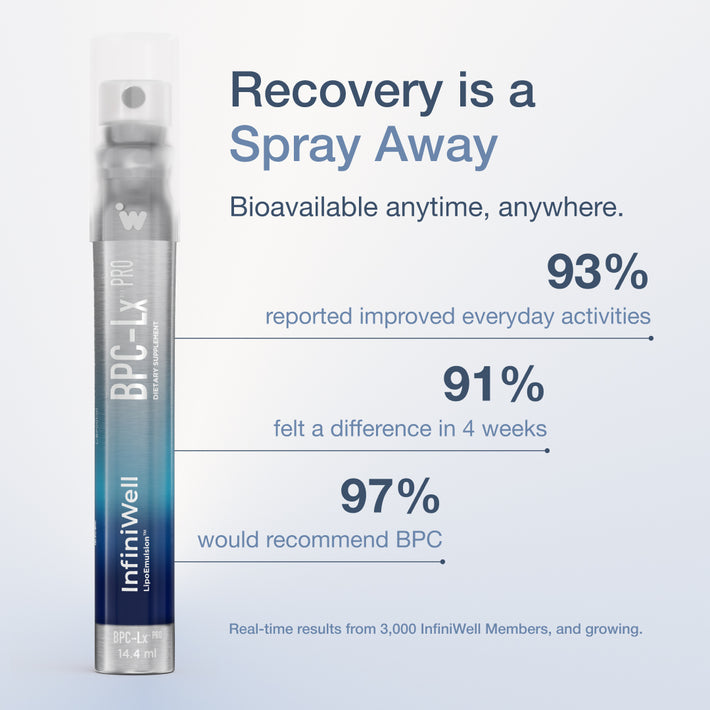
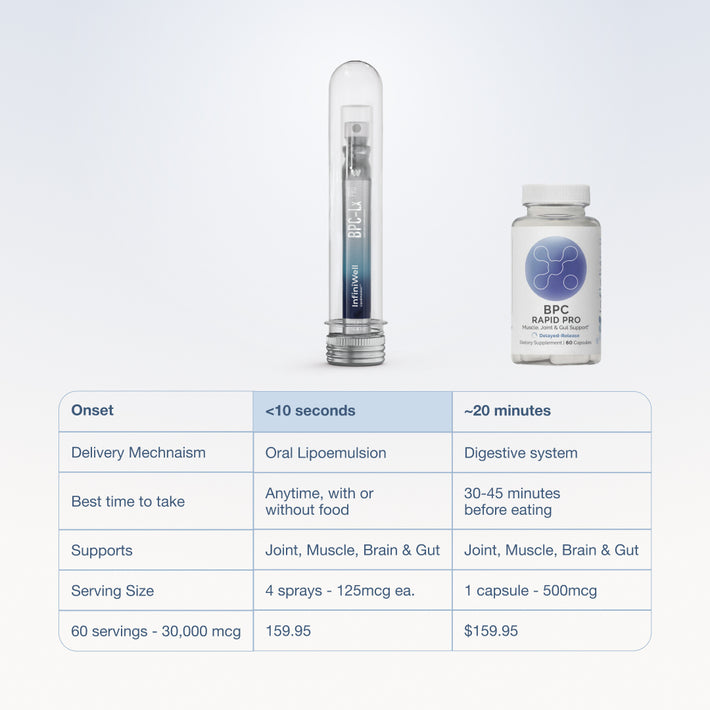
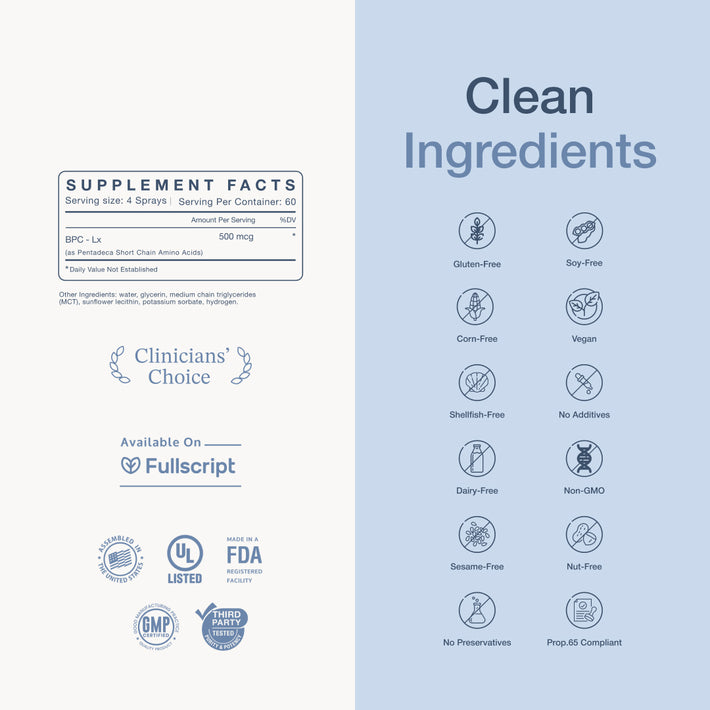
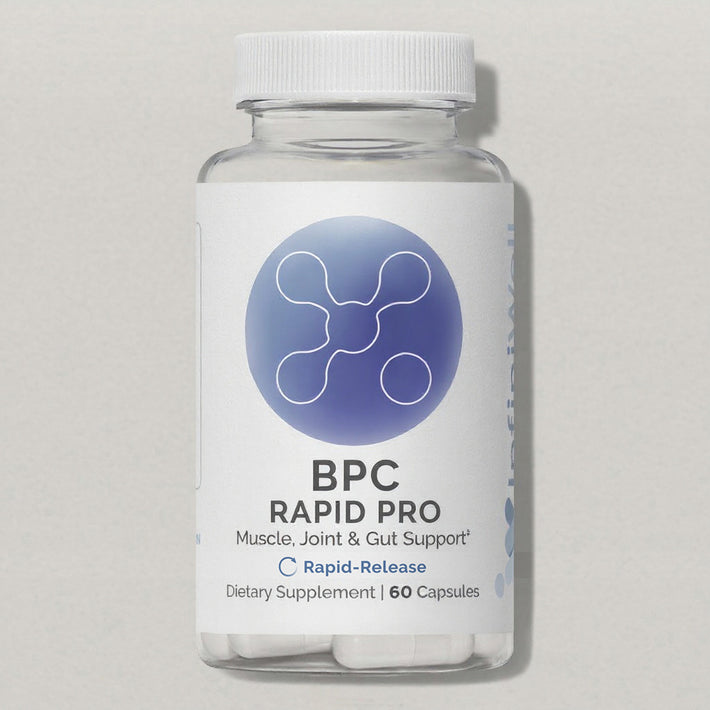
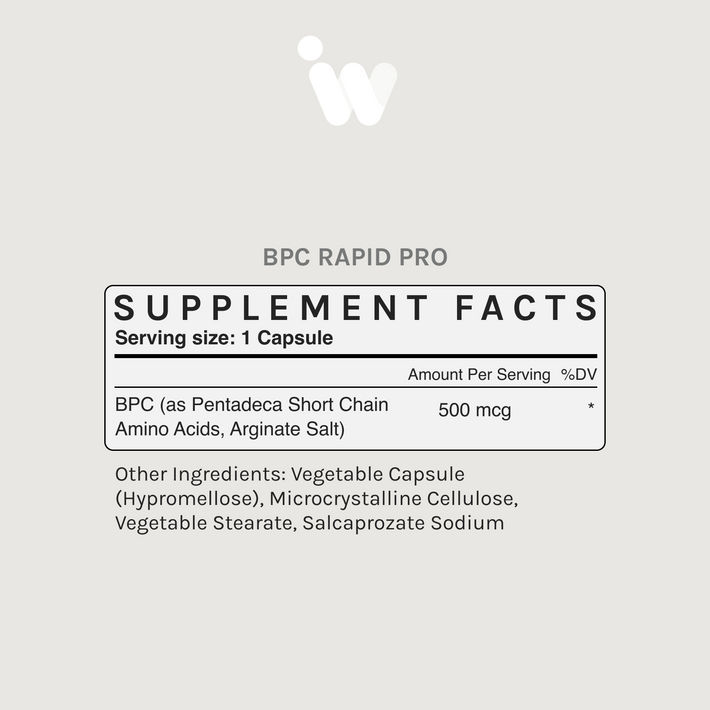
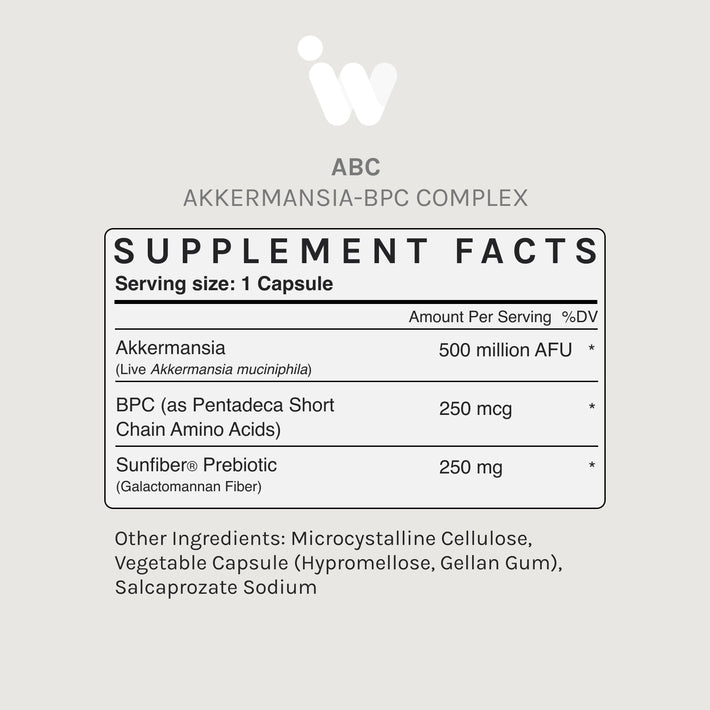
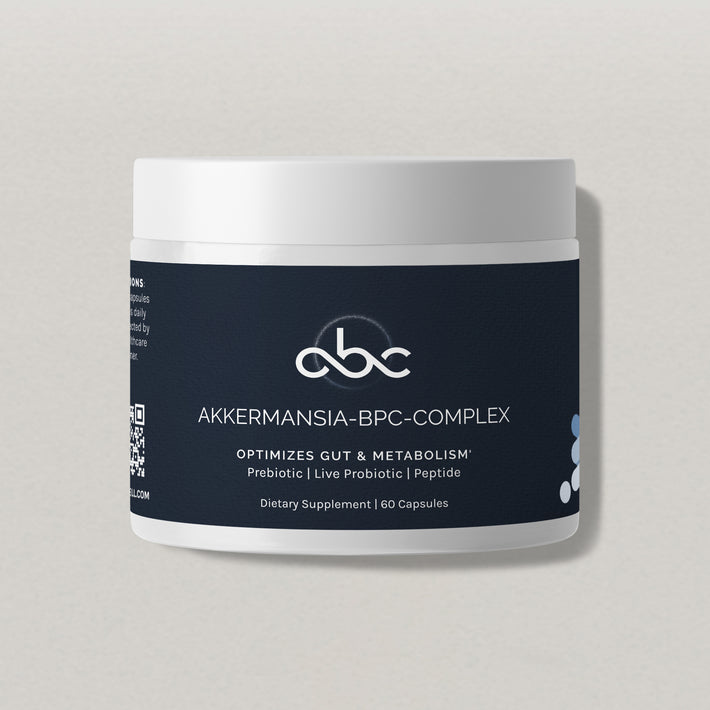
InfiniWell's oral BPC formulas take an amino acid approach, which is why you'll see them described as pentadeca short-chain amino acids. If you want the deeper background, our guide on how to pick a BPC formula walks through the options.
What is KPV?
KPV is about as small as a peptide gets: three amino acids (lysine, proline, and valine) that make up the tail end of a naturally occurring hormone called alpha-melanocyte-stimulating hormone, or alpha-MSH.
Early laboratory and animal research has explored how the gut lining takes up KPV and how it interacts with the immune system at a cellular level. Like BPC, it sits firmly in the early-research category. You'll sometimes see it referred to as oral KPV when it's formulated for everyday use.
Also read:
What the early research has looked at
It helps to know where the science stands before adding anything to a routine. Nearly all of the work on these peptides comes from preclinical studies in animals and cells, not from large human trials, so the findings below describe what researchers have observed in the lab rather than proven outcomes in people.
BPC-157
In those studies, BPC has been examined for how it interacts with the body's nitric oxide production and with blood vessel growth, both of which play a role in healthy blood flow. Researchers have also examined different tissues throughout the body, including the stomach and gut lining, along with processes such as collagen synthesis.
Because amino acids are essential building blocks the body uses across the entire body, this kind of broad research interest isn't unusual.
KPV
KPV research has centered on the digestive environment, including how the gut lining and the gut microbiome respond to it and how it relates to the immune system. Early findings here point to a possible role in gastrointestinal health and normal digestive function within the GI tract, though this also sits at the preclinical stage.
None of this confirms what either peptide does in the human body, and results in people may differ.
Why people combine BPC-157 and KPV
The two peptides are studied for different things:
-
BPC research has largely focused on digestive health.
-
KPV research has largely focused on immune function.
Pairing them gives people a way to support more than one aspect of everyday wellness at once, instead of focusing on just one area. That's why some supplement brands formulate BPC and KPV together in a single product. Rather than taking multiple supplements, users can incorporate both peptides into the same daily routine.
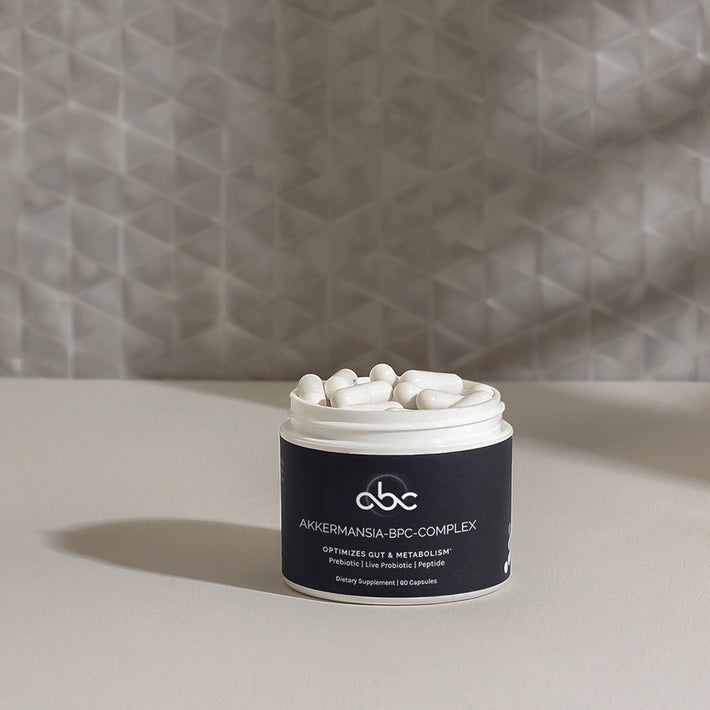
InfiniWell's BPC + KPV combo reflects that approach, bringing both peptides together in one convenient serving. While the pairing is grounded in complementary areas of research, the science is still evolving, and results can vary from person to person.
Here's a quick side-by-side look at how the two peptides compare:
|
|
BPC |
KPV |
|
What it is |
15-amino-acid pentadecapeptide |
3-amino-acid tripeptide from alpha-MSH |
|
Common area of study |
Gut and digestive health |
Immune response and gut health |
|
Research stage |
Mostly preclinical and animal-based |
Mostly preclinical and animal-based |
|
Typical format |
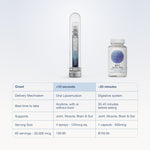
Oral capsule or spray |
Oral |
How the combo is typically used
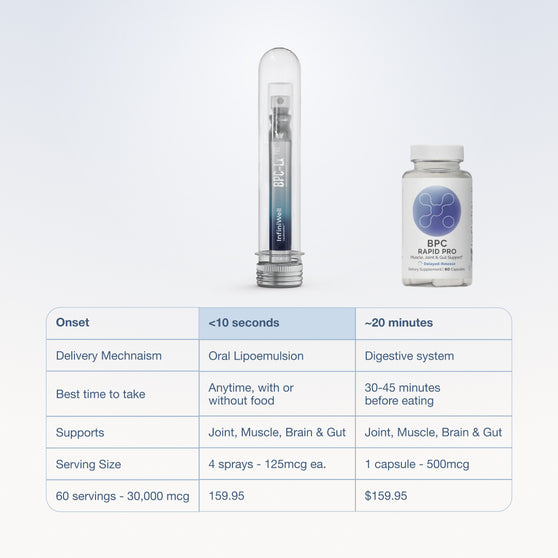
Both peptides are available in oral formats, so combined products are typically designed as a single daily serving that includes both BPC and KPV.
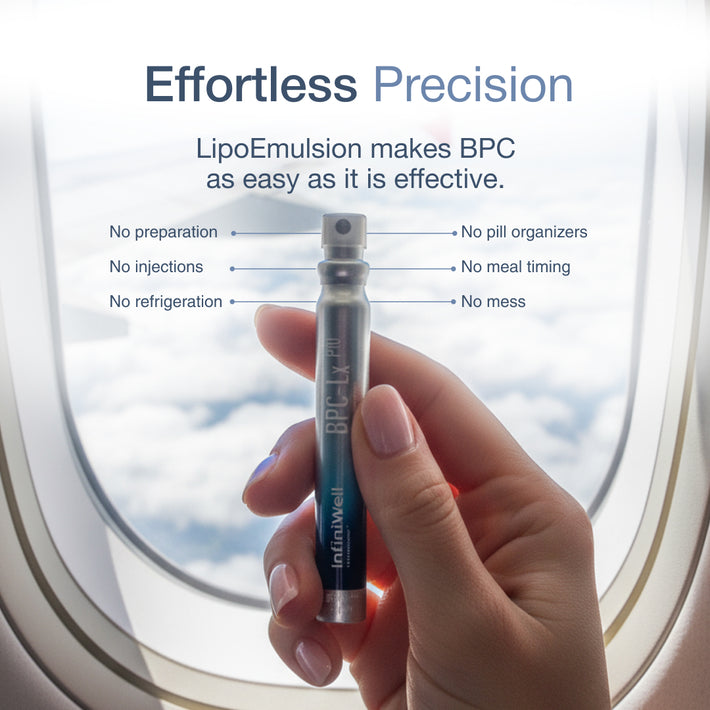
Always follow the suggested use on the product label. If you're interested in learning more about the available formats, our guide to comparing BPC formats explains the differences between capsules and sprays.
You can also explore the full BPC precision aminos lineup to see how the different formulas compare. As with any supplement, consult a qualified healthcare professional if you have questions about whether a product is appropriate for your needs.
The bottom line on BPC and KPV
BPC and KPV are often paired because they're studied for different areas of wellness: BPC for digestive health and KPV for immune function. Bringing them together in one formula offers a convenient way to incorporate both into a daily wellness routine.
Research on both peptides is still emerging, so it's best to view them as wellness-focused ingredients rather than proven solutions. If you have questions about whether they're appropriate for you, talk with a qualified healthcare professional.
Ready to see the pairing in one formula? Explore our BPC + KPV combo or take the BPC formula quiz to find your fit.
BPC and KPV: FAQs
-
SOURCES
Products mentioned in this article


You May Also Like
View All Articles

How to Tell If a Peptide Company Is Legit: What to Check
Not every peptide company provides the same level of transparency. Learn how to verify testing documents, review product labels, and spot warning signs before buying from a new source.

Peptide Stacks: Real Benefits or a Biochemical Gamble?
Peptide stacks spark debate—and not without cause. Here's how to move past the hype and how stacks may support your health goals.